


Abstract
Differences in hand geometry, joint parameterization, and kinematic topology pose challenges for cross-embodiment dexterous grasp generation. However, spatial relations among links alone are insufficient to fully capture the hand's kinematic topology. We propose DexGraspFlow, a conditional link-level $\mathrm{SE}(3)$ flow-matching framework integrating geometric relations and kinematic topology.
The framework encodes local object geometry, link geometry, and current poses. A dual-stream DiT models link--link coordination and link--object interaction, while attention biases derived from kinematic-tree distances provide explicit structural information for modeling evolving geometric interactions. The model jointly learns translational and rotational velocity fields, integrates them to generate link poses, and recovers joint configurations through inverse kinematics. Additionally, inference-time palm-orientation guidance enables controllable grasp generation without retraining.
Across three robotic hands and 30 object--hand pairs, DexGraspFlow achieves a 95.33% average simulation success rate, with an average generation latency, including inverse kinematics, approximately 49% lower than that of a state-of-the-art baseline. Further experiments demonstrate zero-shot adaptability to seven finger-removal variants and palm-orientation control. A model trained on demonstrations for the deployed hand achieves a 91% success rate over 100 real-robot grasping trials, supporting its practical applicability.
1. Motivation
Cross-embodiment dexterous grasp synthesis faces two fundamental challenges:
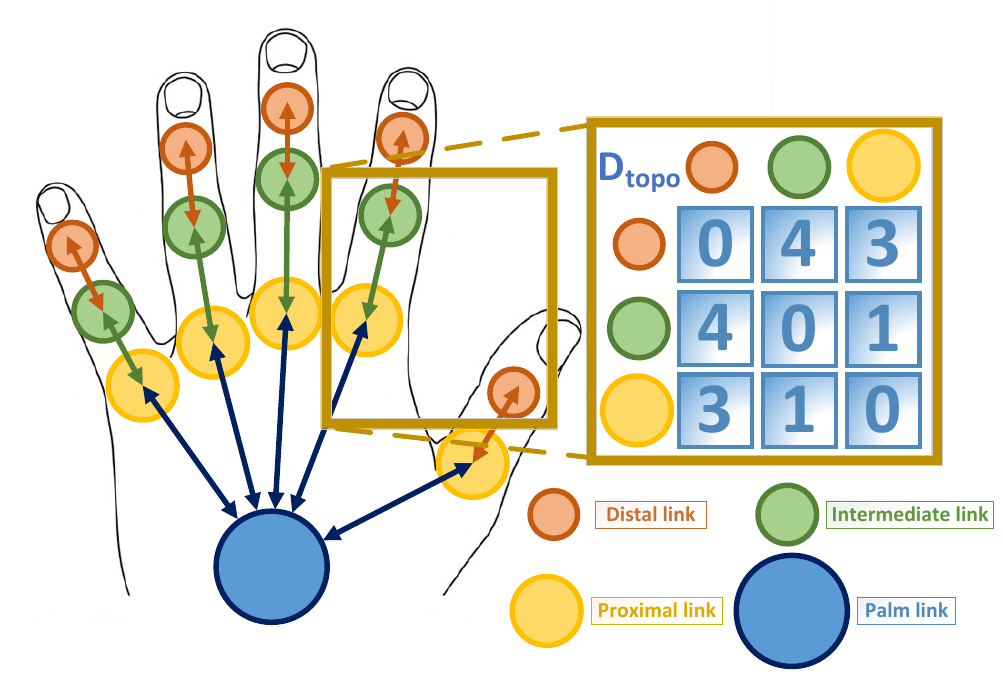
(a) Kinematic Topology Awareness: Preserving Skeleton Feasibility
The Problem: Spatial Euclidean distance ignores the robot's kinematic skeleton. Denoising in unconstrained 3D space causes severe joint hyperextensions, finger crossovers, and kinematic invalidity.
Our Solution: We inject an invariant kinematic hop-count matrix $\mathbf{D}_{\mathrm{topo}}$ as a structural attention bias, constraining continuous flow matching to evolve strictly along the robot's physical kinematic manifold.
(b) User-Decided Controllable Generation: Meeting Downstream Task Intent
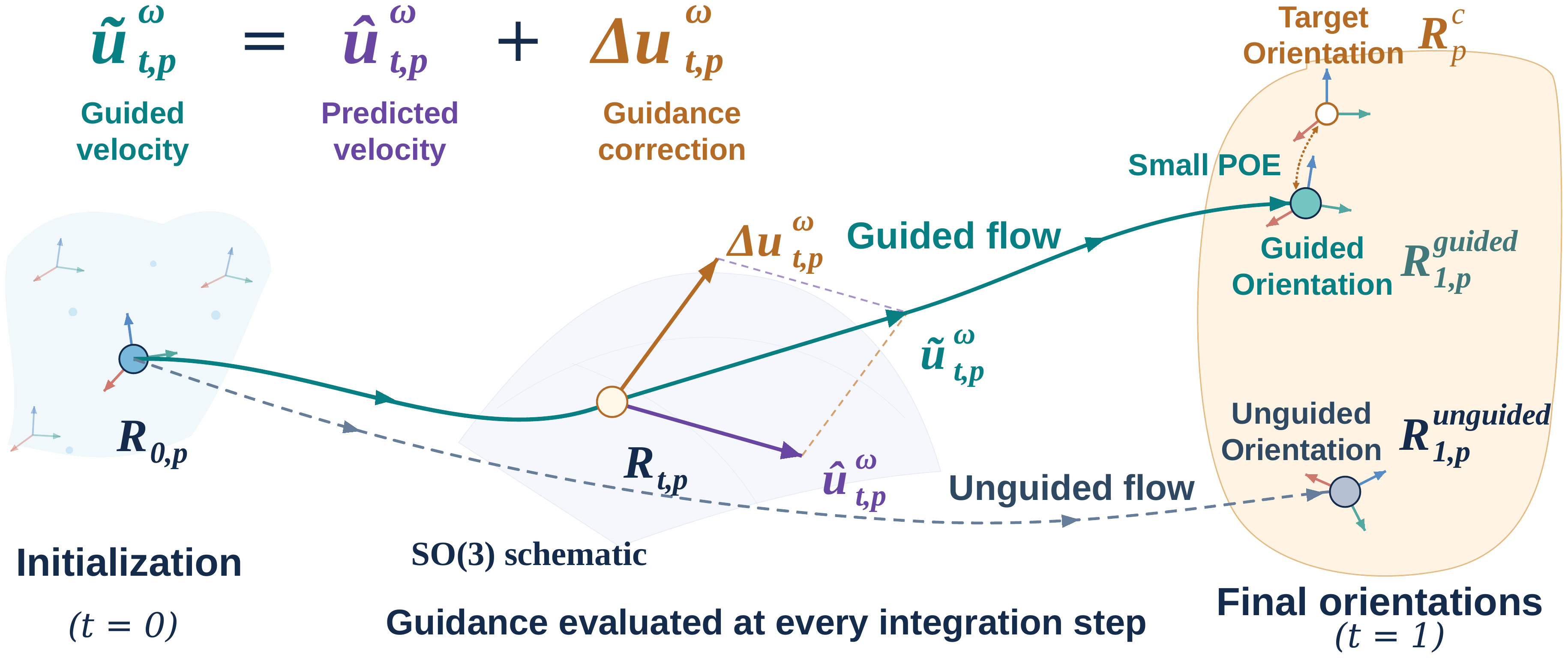
The Problem: Practical robotic manipulation requires grasp poses aligned with downstream task intents (e.g., pouring from the side, bin-picking from above). Existing cross-embodiment models rely on blind random sampling or require expensive model retraining for every new condition.
Our Solution: We formulate training-free inference-time geodesic guidance on $\mathrm{SO}(3)$. Given user-specified approach directions, closed-form rotational velocity corrections $\Delta\mathbf{u}_{t,p}^{\omega} = s(t)\lambda_c\mathbf{R}_{t,p}^{\top}\boldsymbol{\omega}_t^c$ are injected into the predicted velocity field ($\tilde{\mathbf{u}}_{t,p}^{\omega} = \hat{\mathbf{u}}_{t,p}^{\omega} + \Delta\mathbf{u}_{t,p}^{\omega}$) at each integration step, smoothly steering the palm toward target poses while preserving physics-compliant contacts.
2. Method Overview: Dual-Stream DiT & Geodesic Flow Matching
DexGraspFlow formulates multi-link dexterous grasp generation as conditional $\mathrm{SE}(3)$ flow matching on the rigid-body Lie group, parameterized by a geometry- and topology-aware dual-stream Transformer:
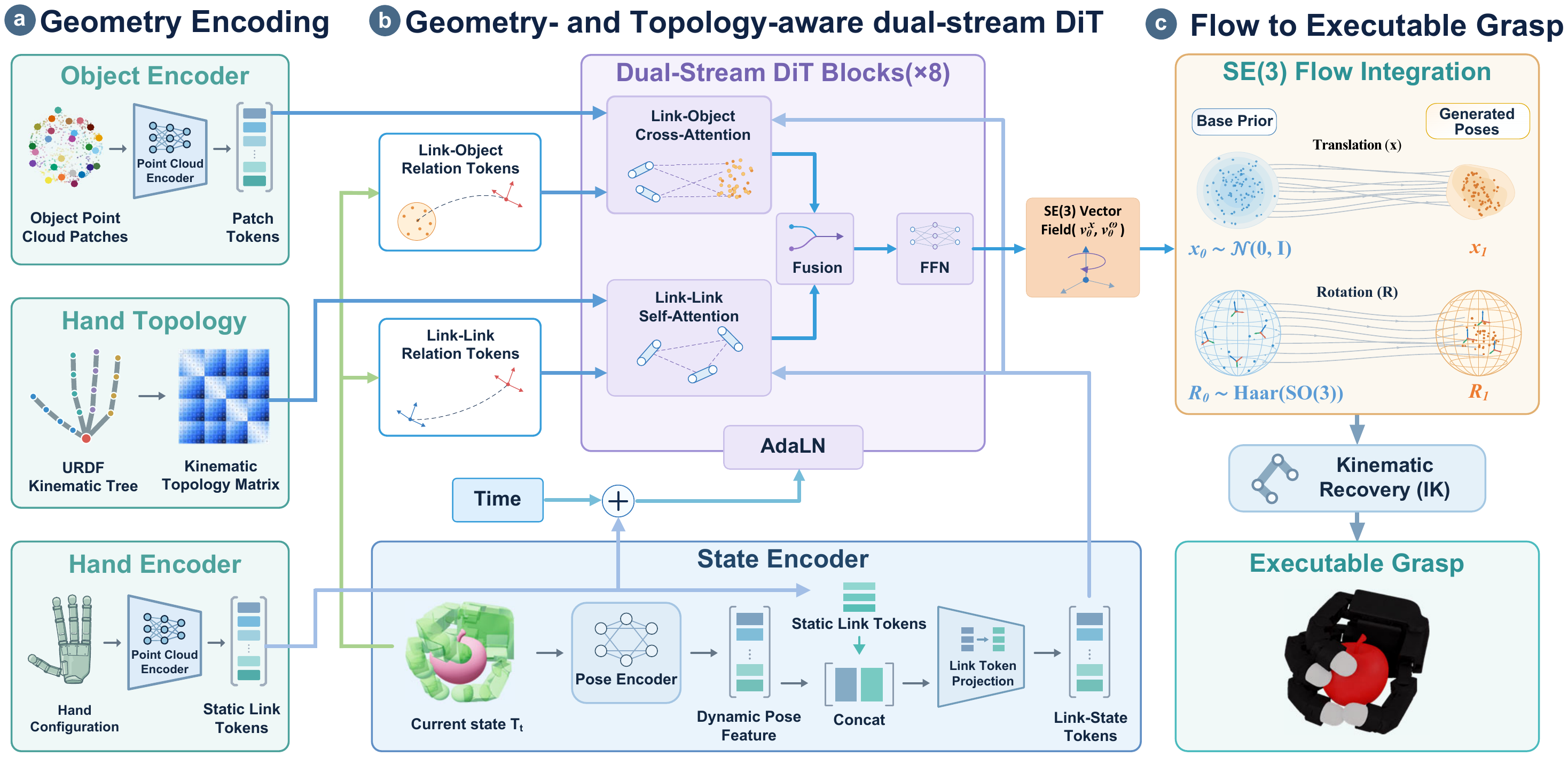
1. Kinematic & Geometric Encoding
The target object point cloud is partitioned into local patch tokens, while each robot link is discretized into surface points and encoded into static link tokens. Concatenating with dynamic rigid poses yields link-state tokens $s_{i,t}$.
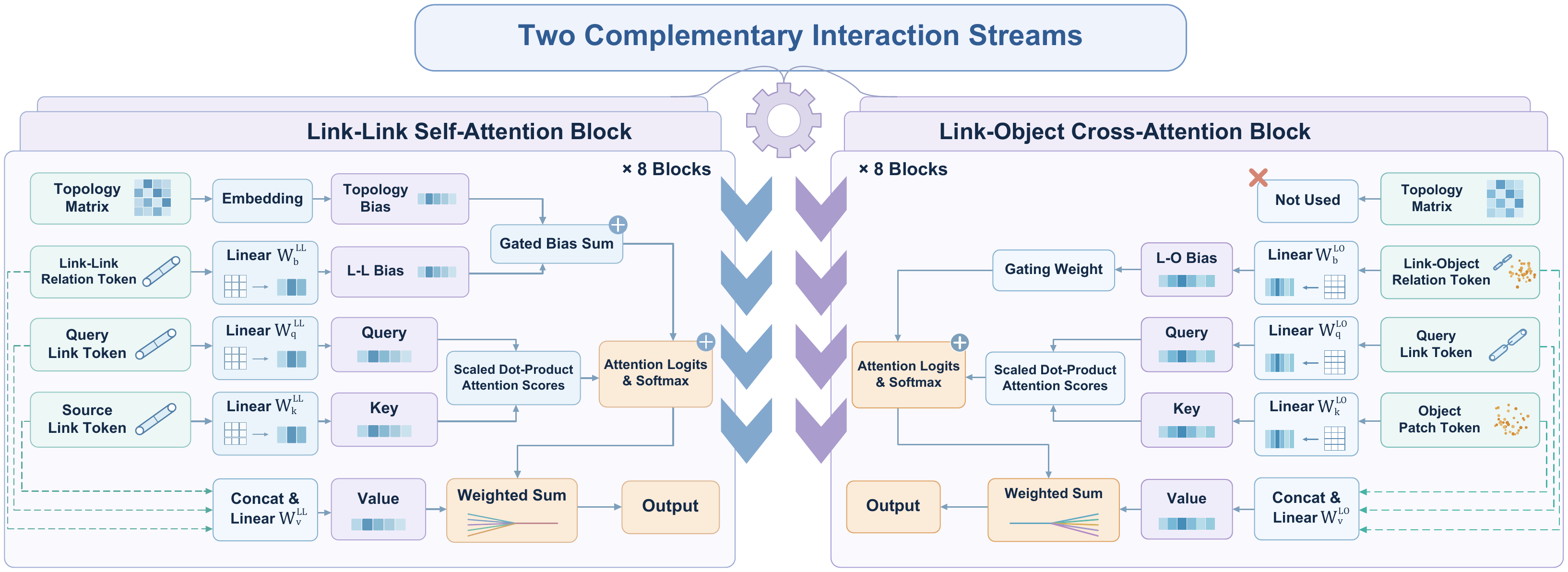
2. Dual-Stream Structural Attention
Link--Link Stream: Injects topological distance biases $\mathbf{B}_{\mathrm{topo}}$ derived from $\mathbf{D}_{\mathrm{topo}}$ to preserve skeleton feasibility.
Link--Object Stream: Injects physical-relation biases $\mathbf{B}_{\mathrm{geom}}$ to accurately model contact geometry.
3. Geodesic Guidance & Batched IK
The network jointly learns translational and angular velocity fields $(v_\theta^x, v_\theta^\omega)$. Training-free geodesic guidance smoothly steers palm orientation during integration, followed by batched GPU Pyroki IK recovery.
3. Continuous Flow Trajectories Across Embodiments
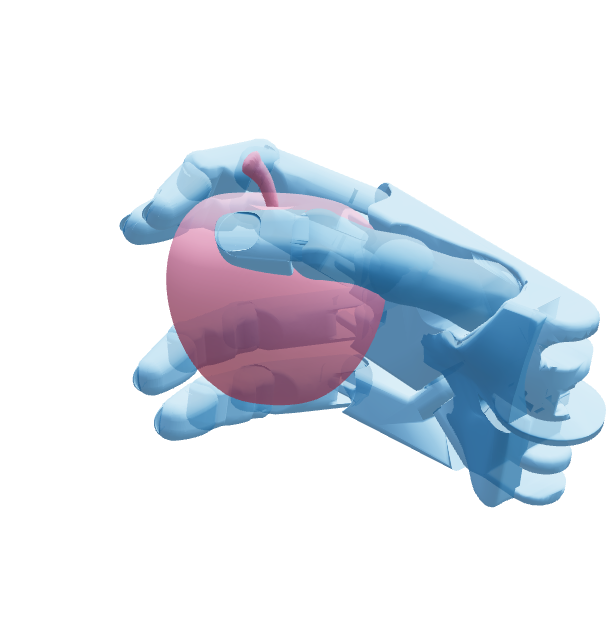
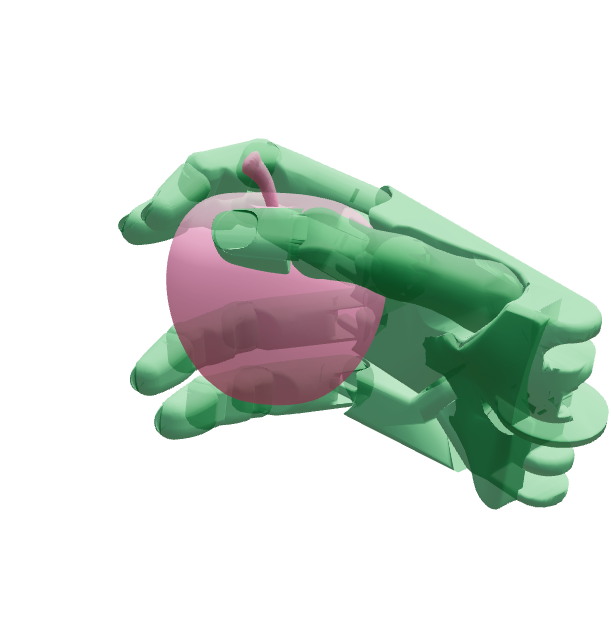
Visualizing the continuous numerical integration of the learned velocity fields from prior Gaussian distributions ($t=0$) through intermediate flow steps ($t=0.2, 0.5, 0.8, 1.0$), followed by batched GPU inverse kinematics:
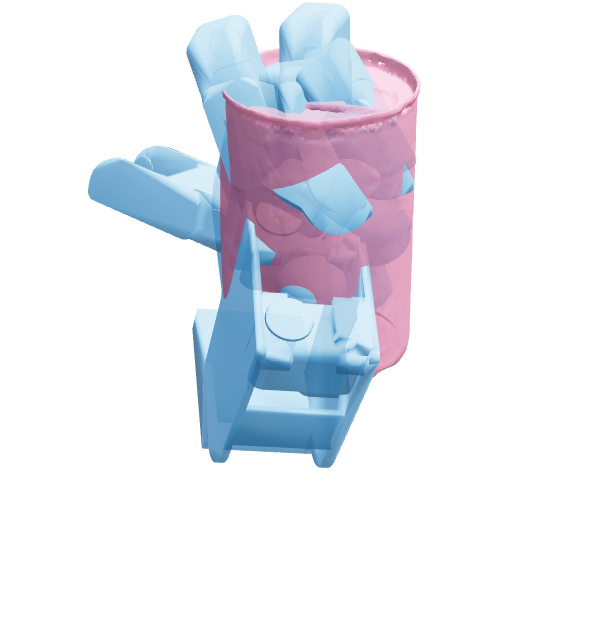 $t = 0.0$ (Prior)
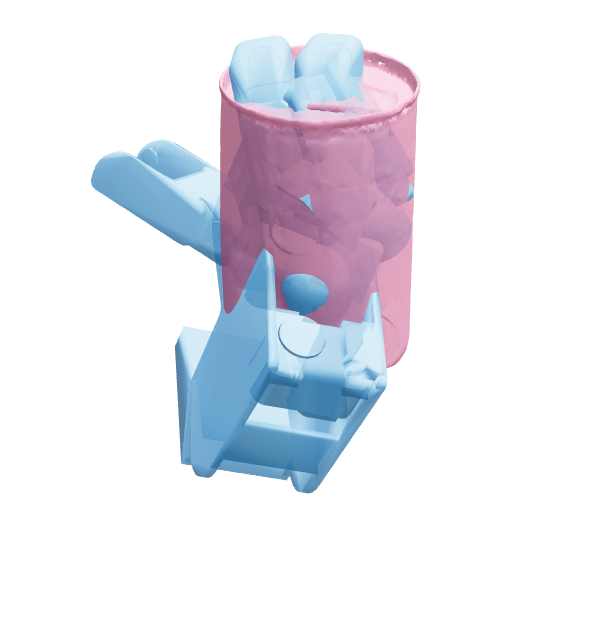 $t = 0.2$
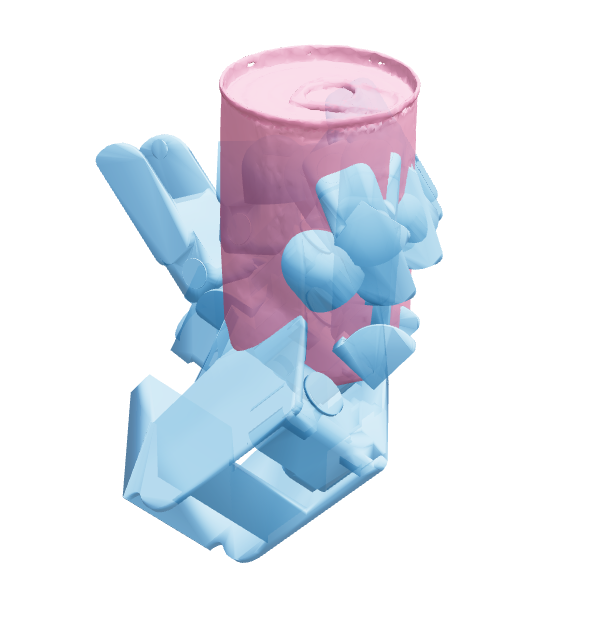 $t = 0.5$
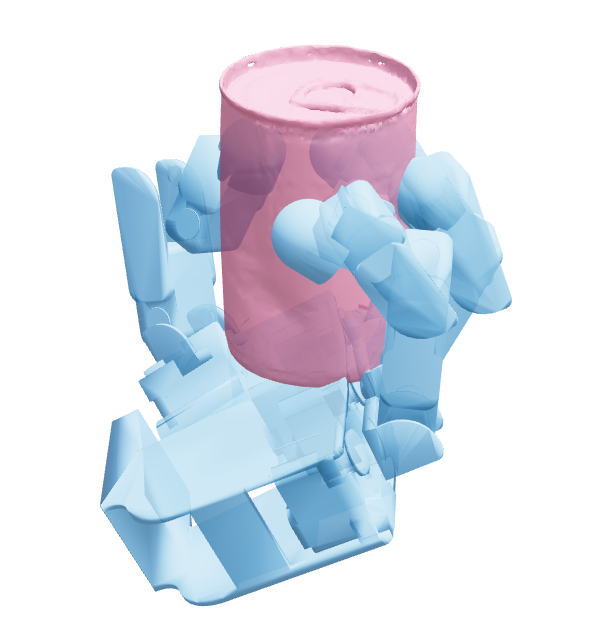 $t = 0.8$
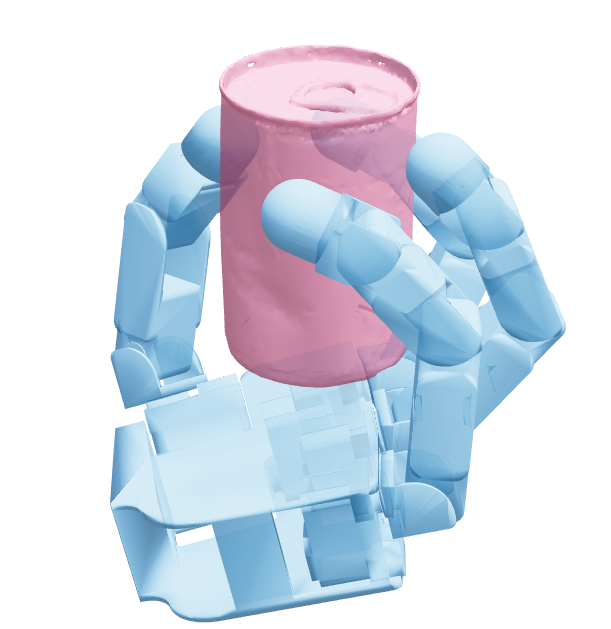 $t = 1.0$ (Link Poses)
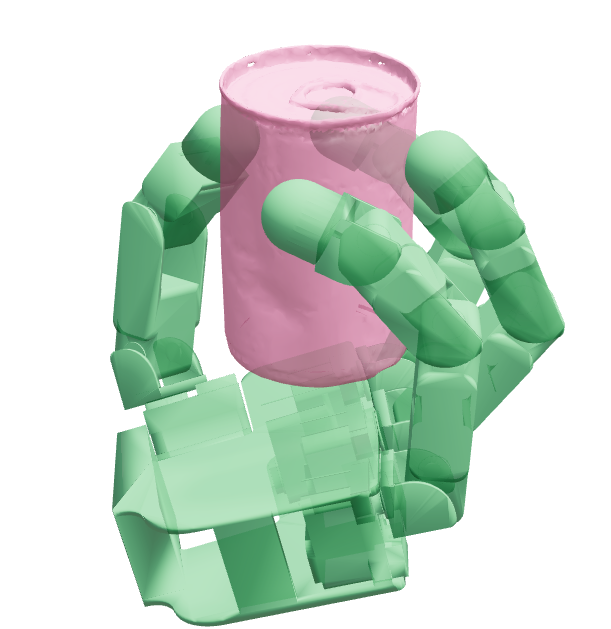 Executed (IK)
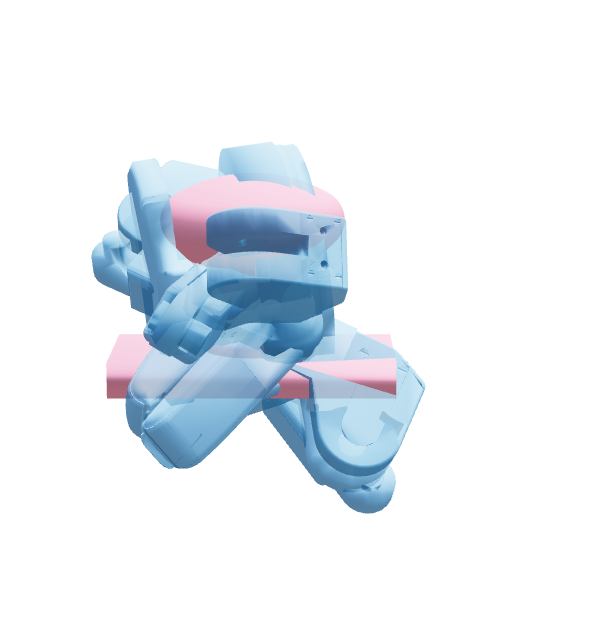 $t = 0.0$ (Prior)
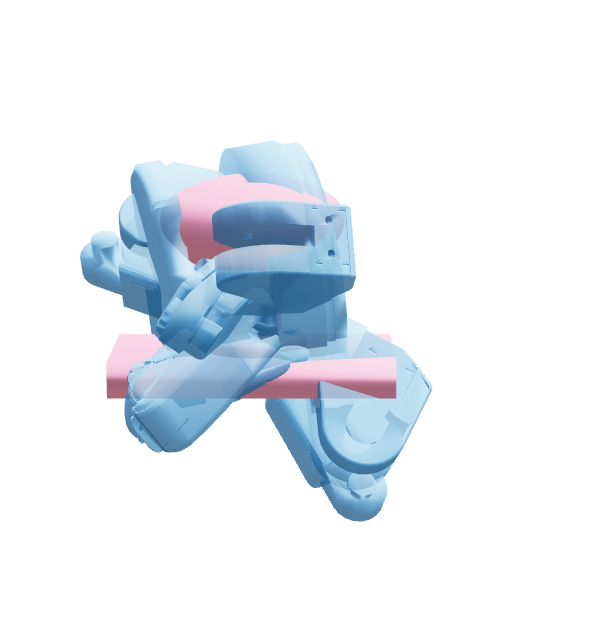 $t = 0.2$
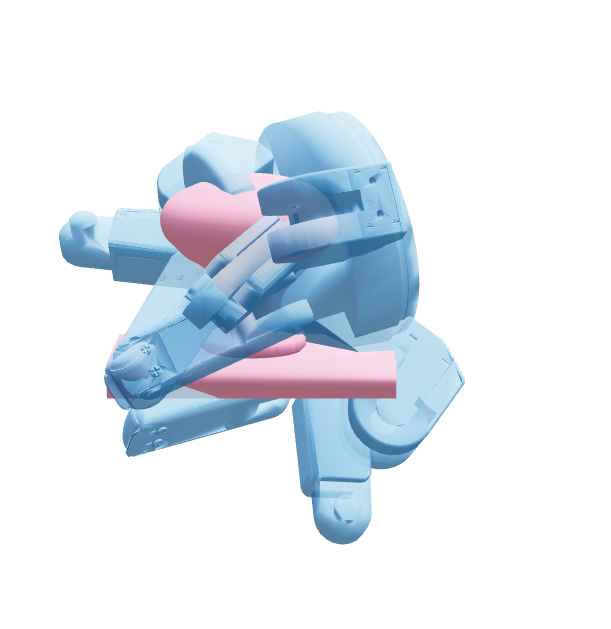 $t = 0.5$
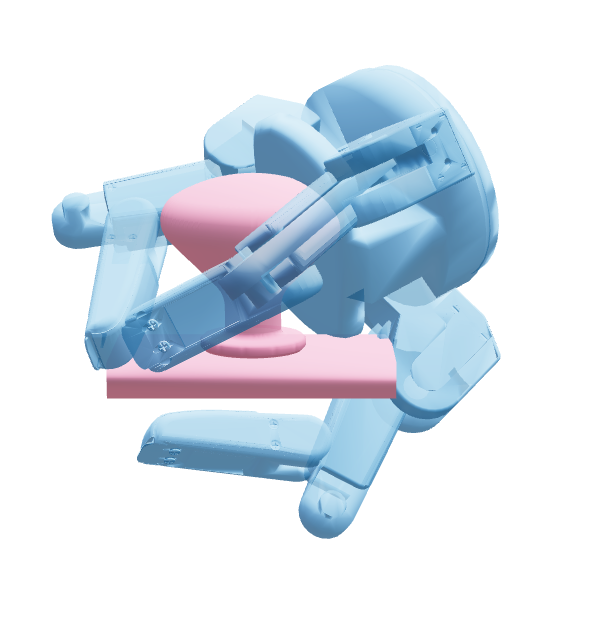 $t = 0.8$
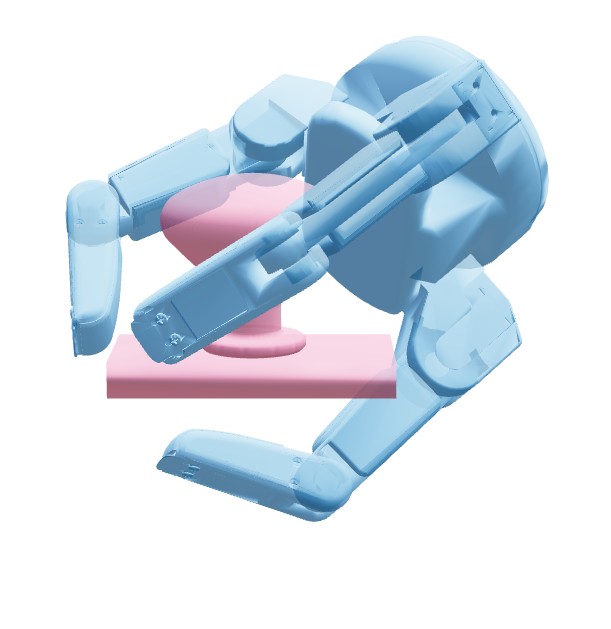 $t = 1.0$ (Link Poses)
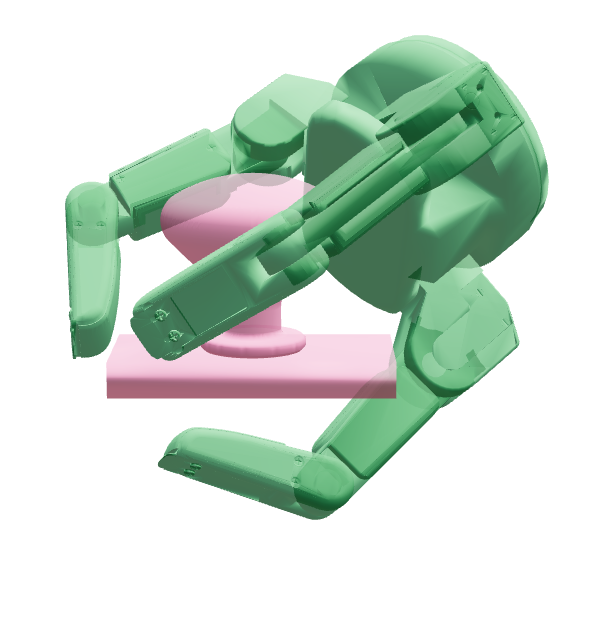 Executed (IK)
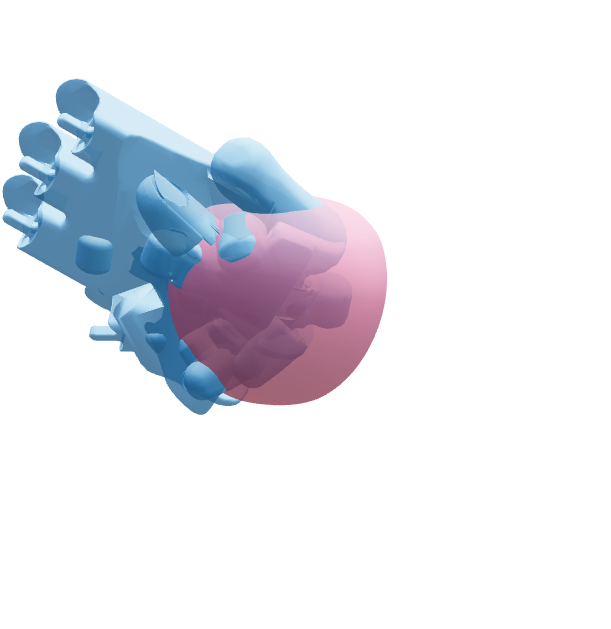 $t = 0.0$ (Prior)
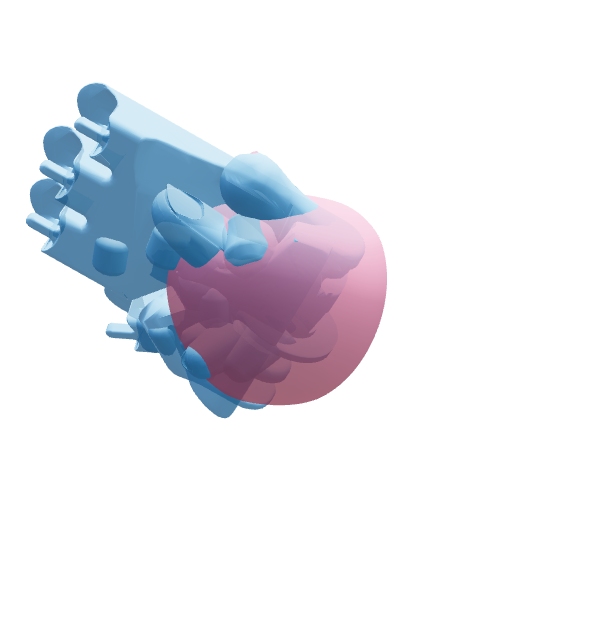 $t = 0.2$
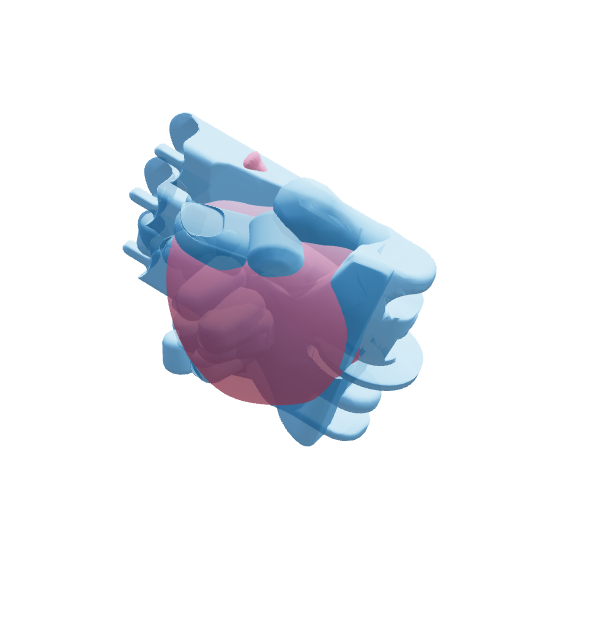 $t = 0.5$
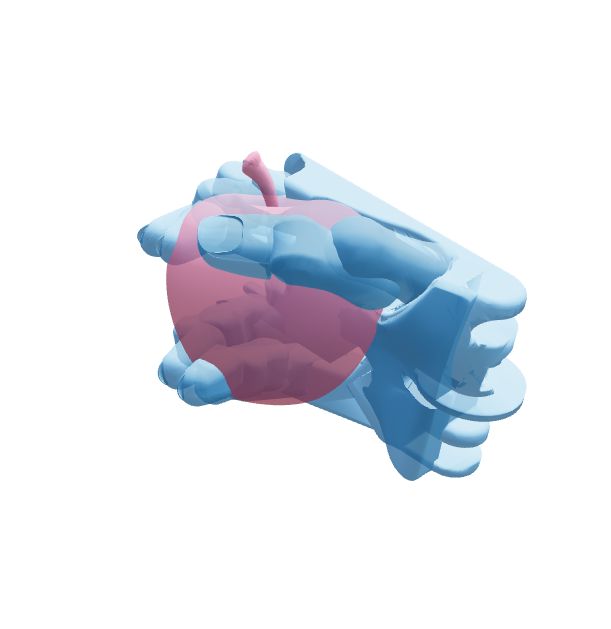 $t = 0.8$
 $t = 1.0$ (Link Poses)
 Executed (IK)
4. Interactive 3D Visualizer
Unconditioned Grasp Generation
Barrett
Allegro
Shadowhand
Zero-Shot Topology Generalization (Finger-Removal Hands)
Allegro Variants
ShadowHand Variants
Palm-Orientation-Conditioned Grasp Generation
Barrett
Allegro
Shadowhand
5. Experimental Results & Benchmarks
Table I: Unconditioned Grasp Generation Across Embodiments
Evaluated across 30 held-out object--hand pairs (3,000 simulated trials). Single-sample latency includes both ODE integration and pre-compiled Pyroki IK recovery.
| Method | Success Rate (%) ↑ | Single-Sample Latency (s) ↓ | ||||||
|---|---|---|---|---|---|---|---|---|
| Barrett | Allegro | ShadowHand | Avg. | Barrett | Allegro | ShadowHand | Avg. | |
| DFC (Optimization) | 86.30 | 76.21 | 58.80 | 73.77 | >1800 | >1800 | >1800 | >1800 |
| GenDexGrasp | 57.40 | 43.10 | 42.30 | 47.60 | 12.933 | 18.347 | 16.540 | 15.940 |
| DRO-Grasp | 86.60 | 91.20 | 81.60 | 86.47 | 0.523 | 0.485 | 0.856 | 0.621 |
| TRO-Grasp | 92.40 | 93.30 | 98.10 | 94.60 | 0.254 | 0.247 | 0.269 | 0.257 |
| DexGraspFlow (Ours) | 92.10 | 98.40 | 95.50 | 95.33 | 0.126 | 0.134 | 0.136 | 0.132 |
Table II: Zero-Shot Generalization to Topology-Modified (Finger-Removal) Hands
Models are trained solely on intact hands and tested directly on 7 amputated variants without fine-tuning. I, M, R, L denote index, middle, ring, and little fingers.
| Method | Allegro (4-Finger) | ShadowHand (5-Finger) | Overall Avg. | |||||
|---|---|---|---|---|---|---|---|---|
| w/o Index | w/o Middle | w/o Ring | w/o Index | w/o Middle | w/o Ring | w/o Little | ||
| DRO-Grasp | 53.60 | 61.40 | 49.90 | 47.80 | 55.40 | 57.90 | 45.80 | 53.11 |
| TRO-Grasp | 11.80 | 45.80 | 65.40 | 2.50 | 4.00 | 7.20 | 6.60 | 20.47 |
| DexGraspFlow (Ours) | 97.00 | 75.10 | 94.50 | 89.00 | 90.60 | 82.80 | 92.20 | 88.74 |
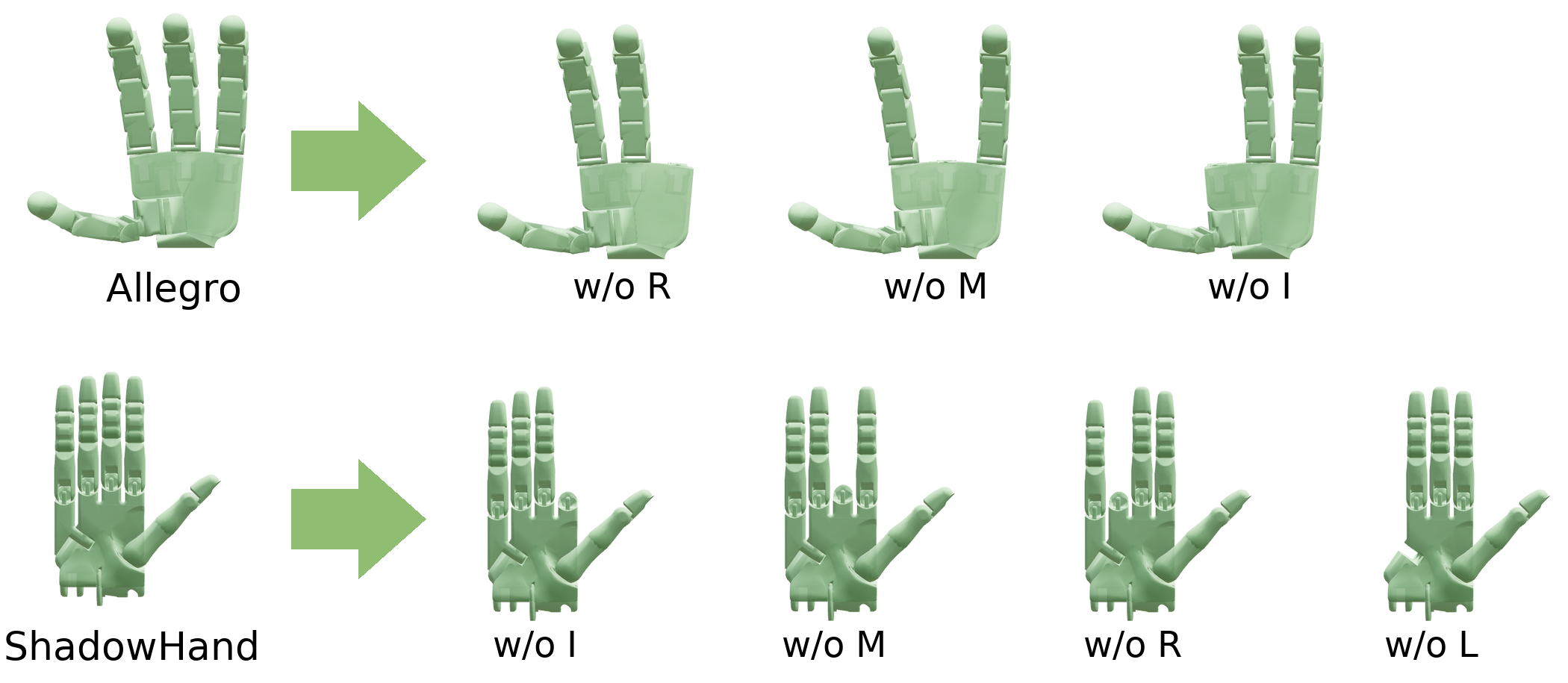
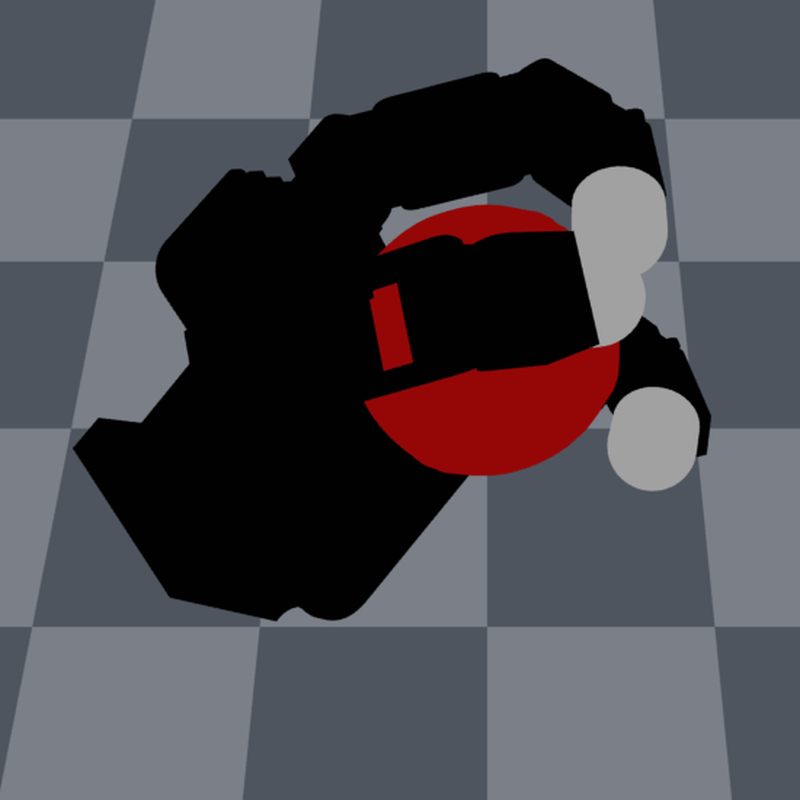
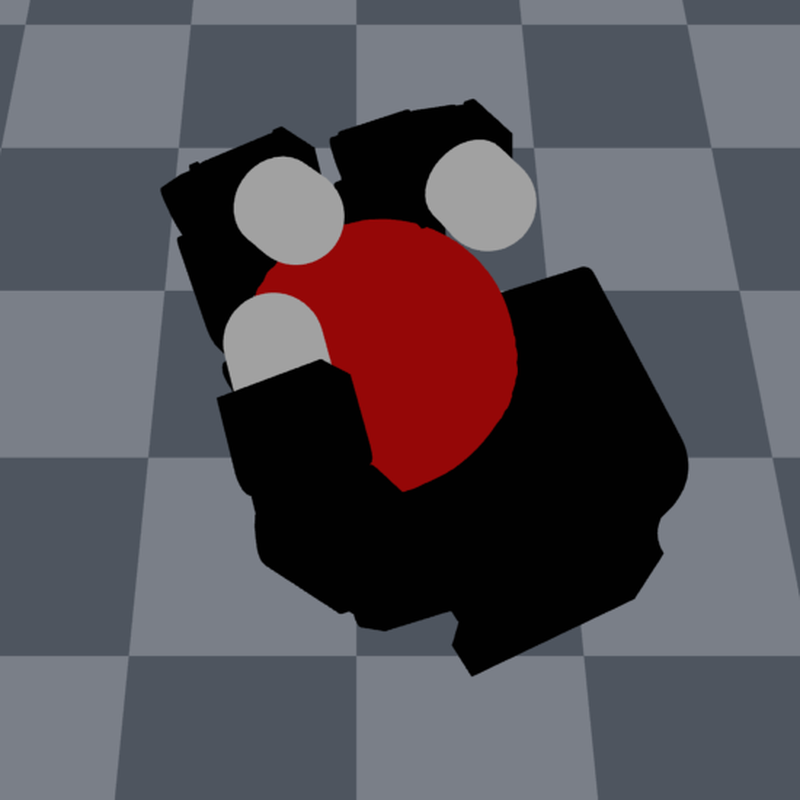
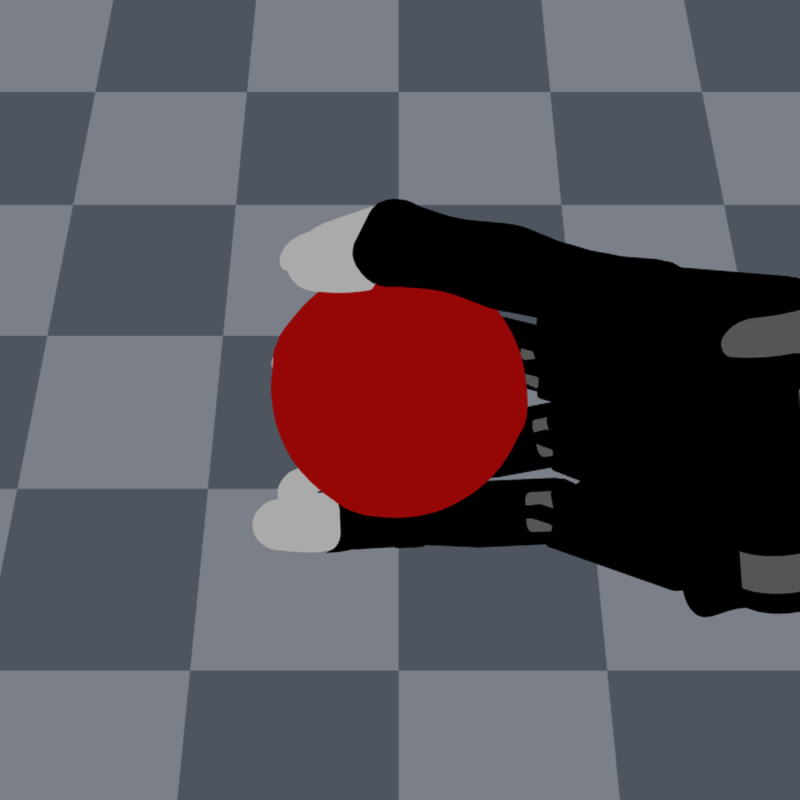
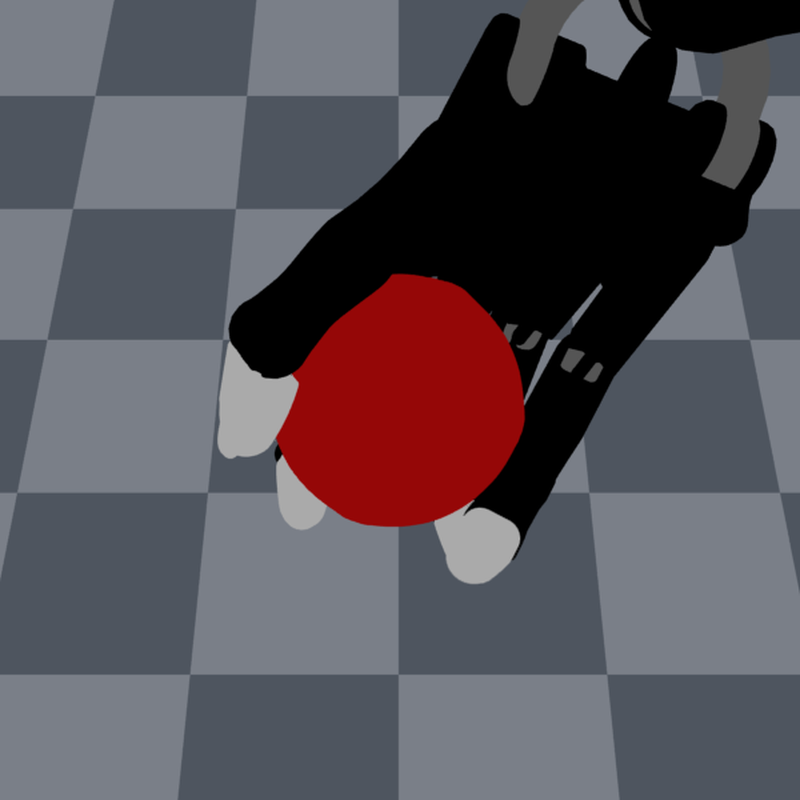
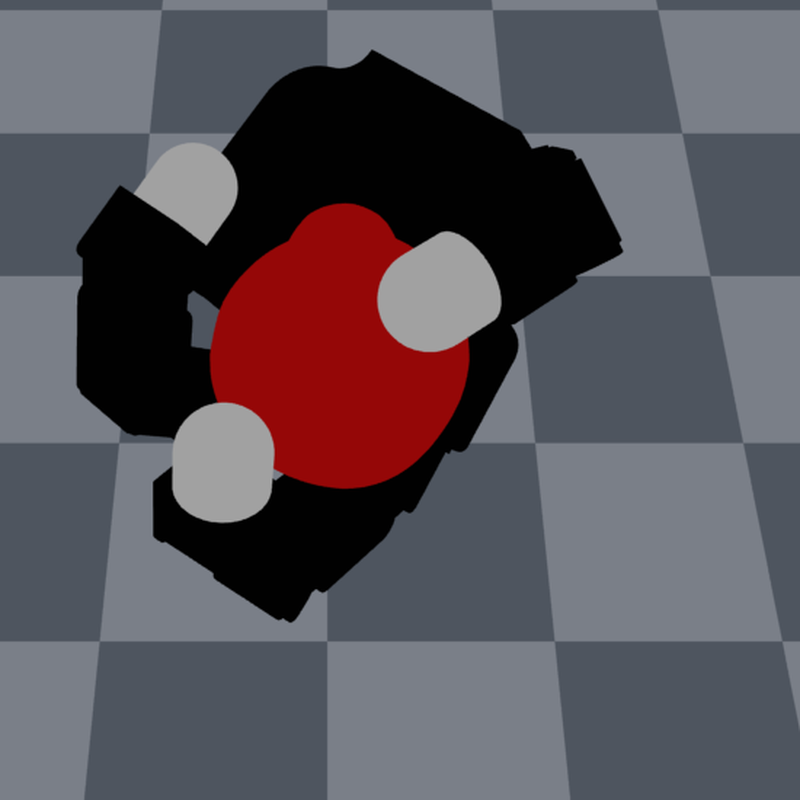
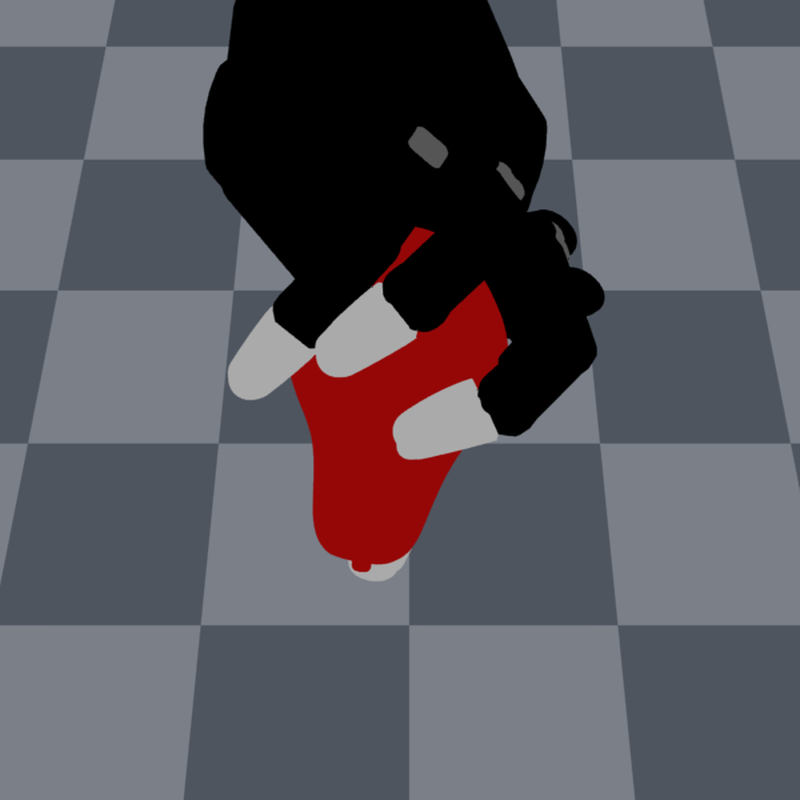
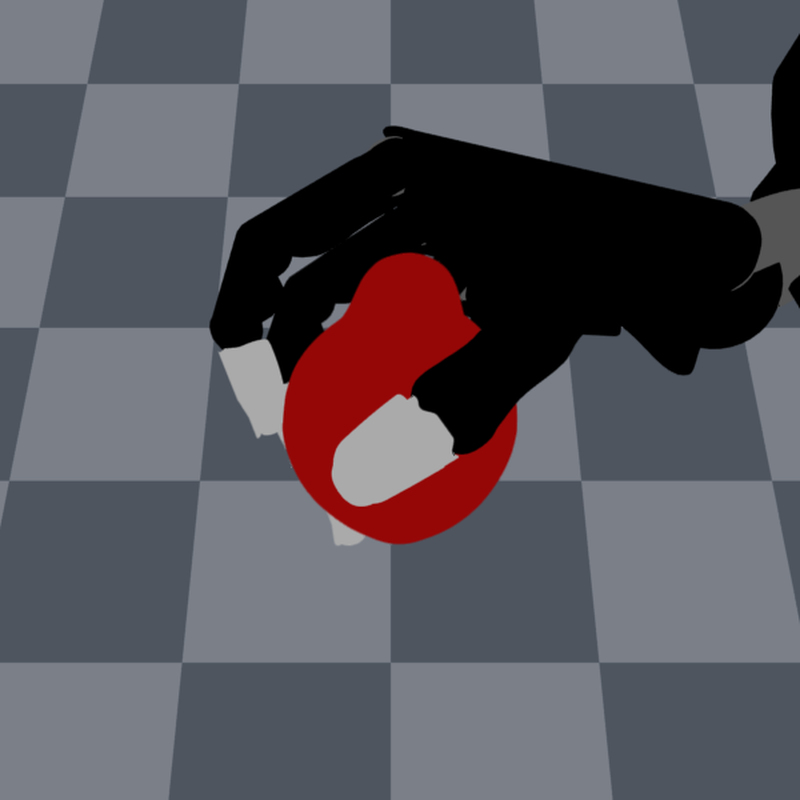
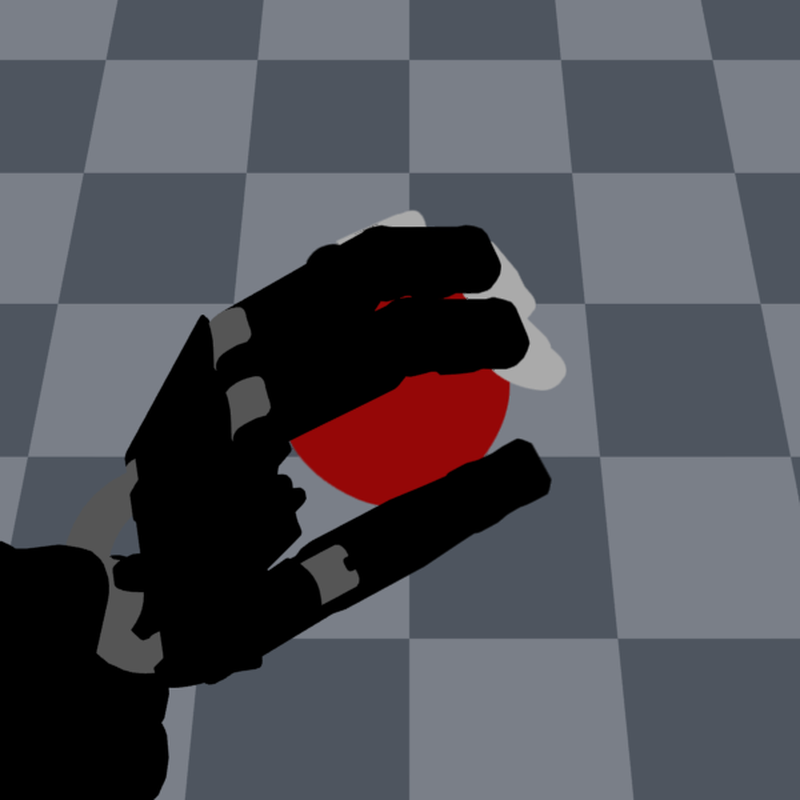
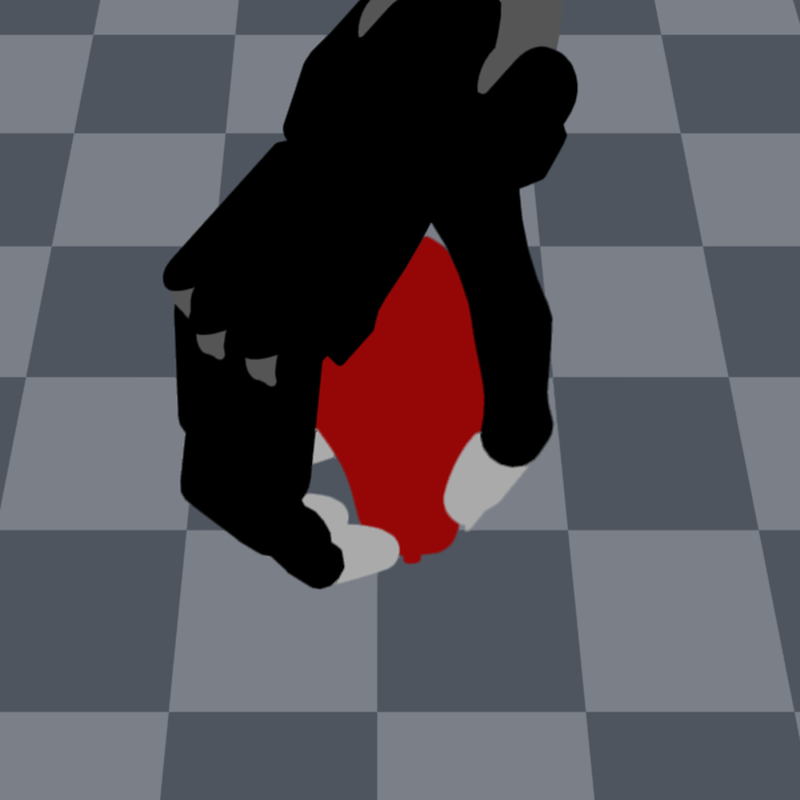
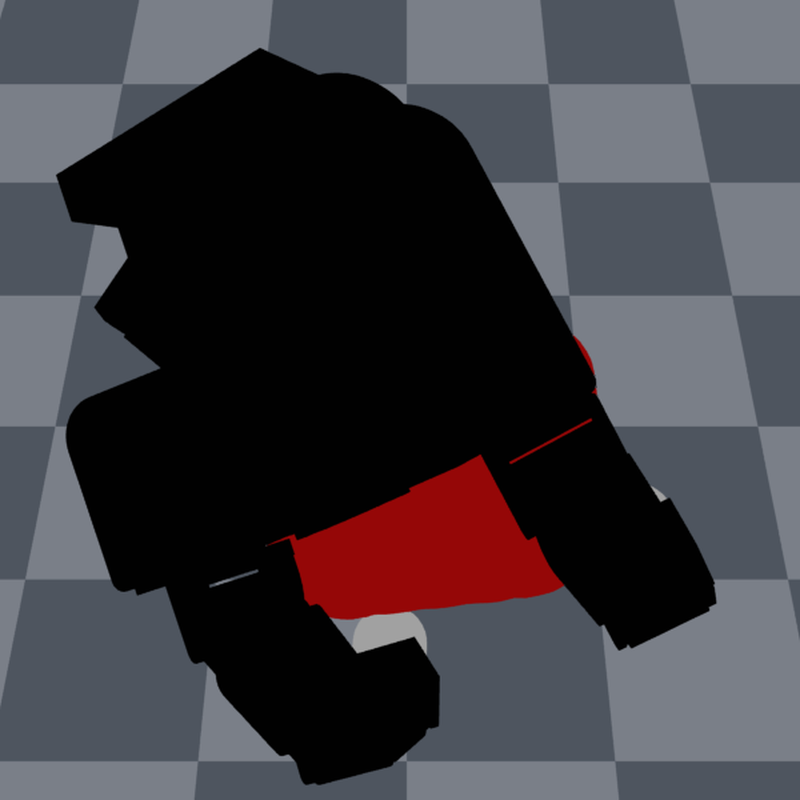
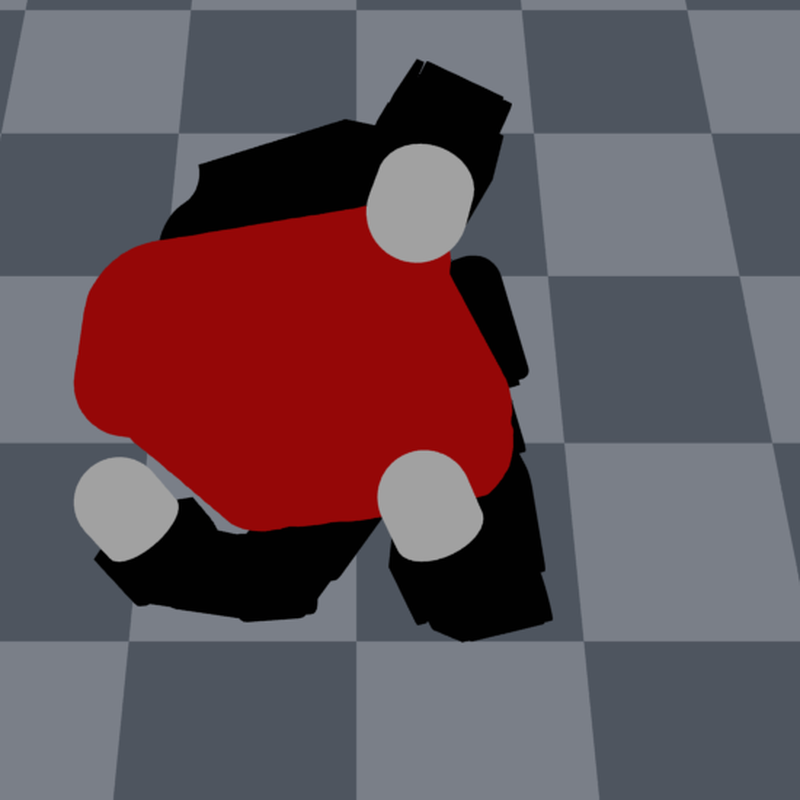
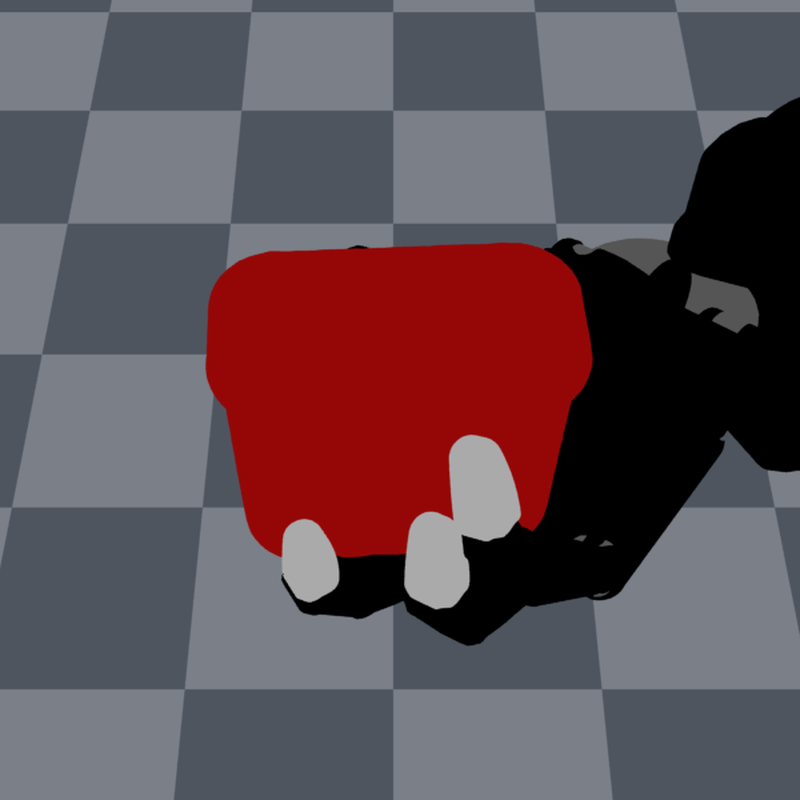
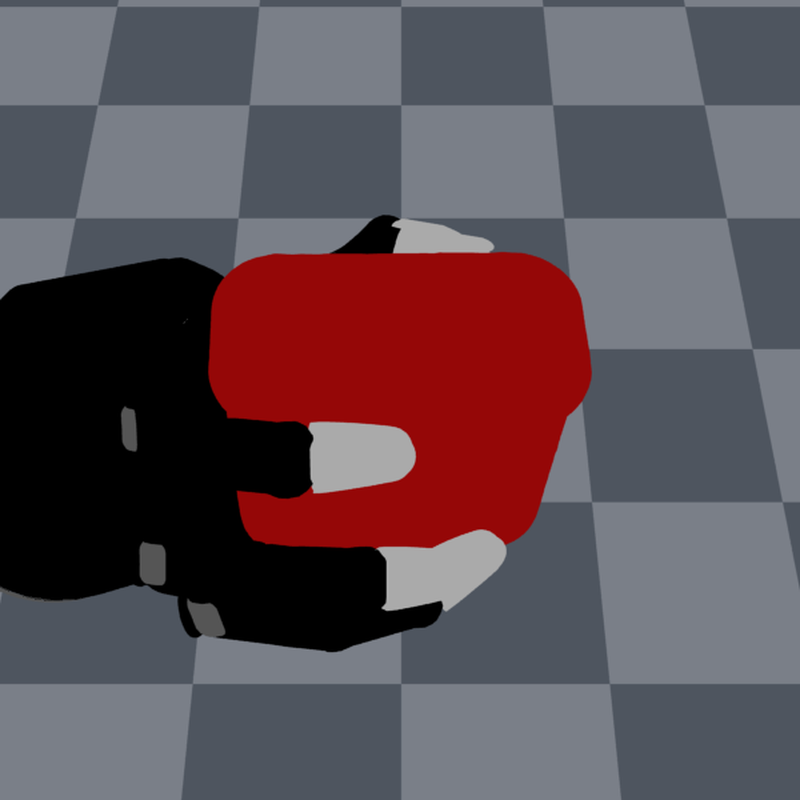
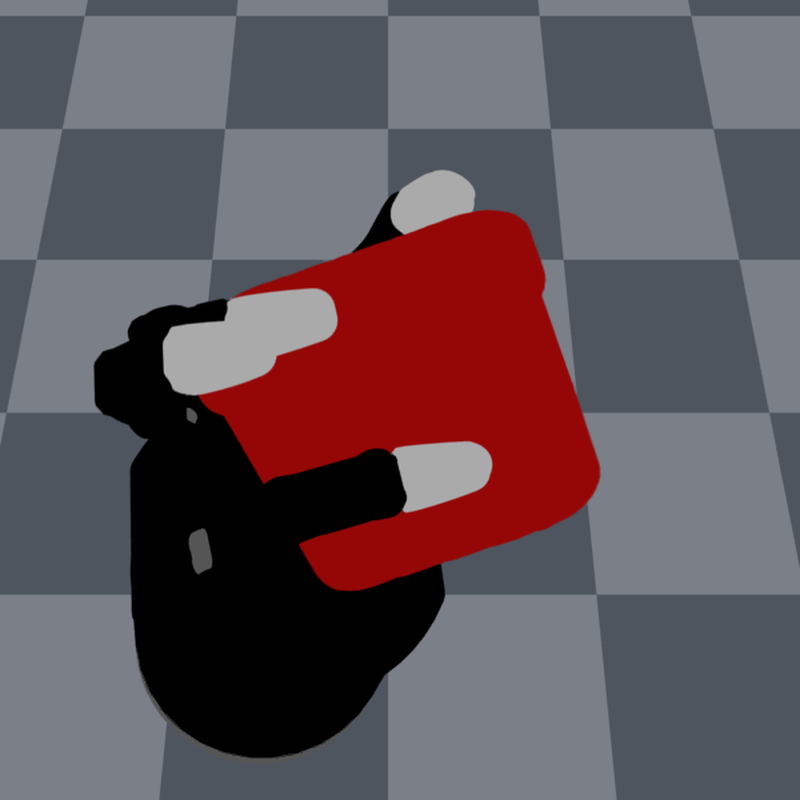
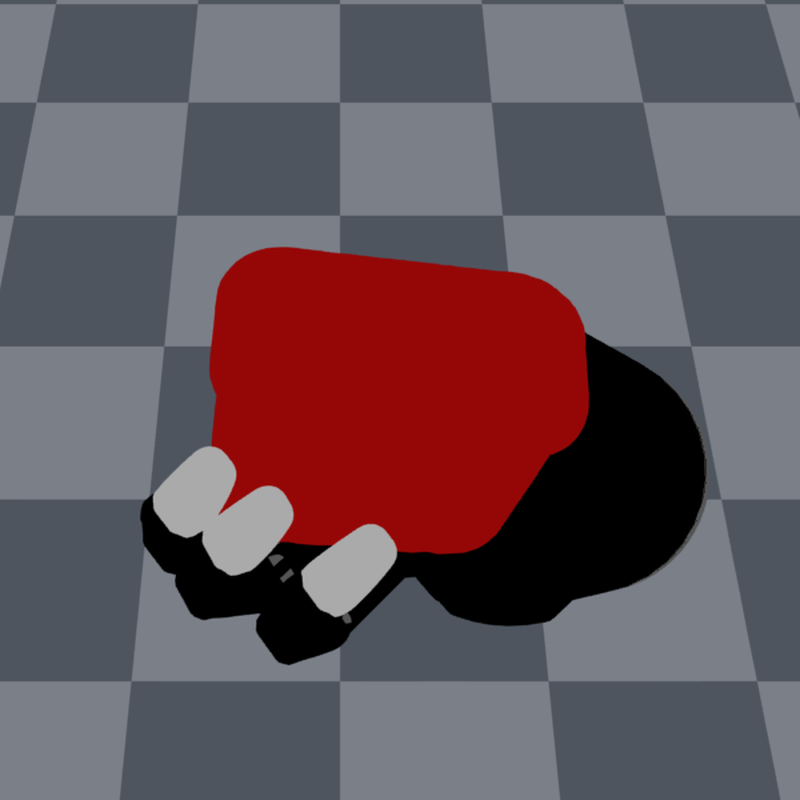
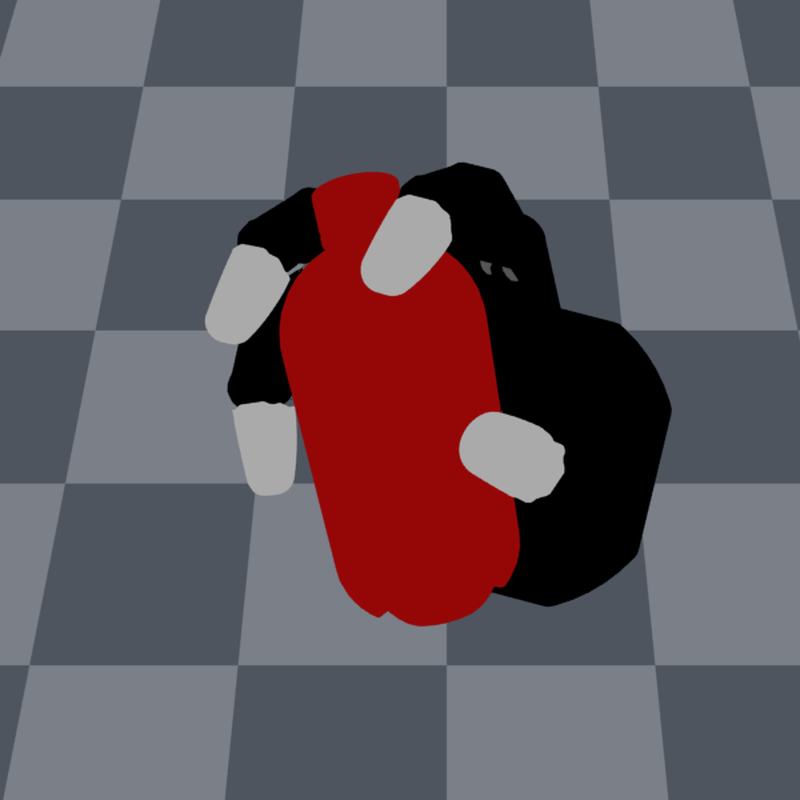
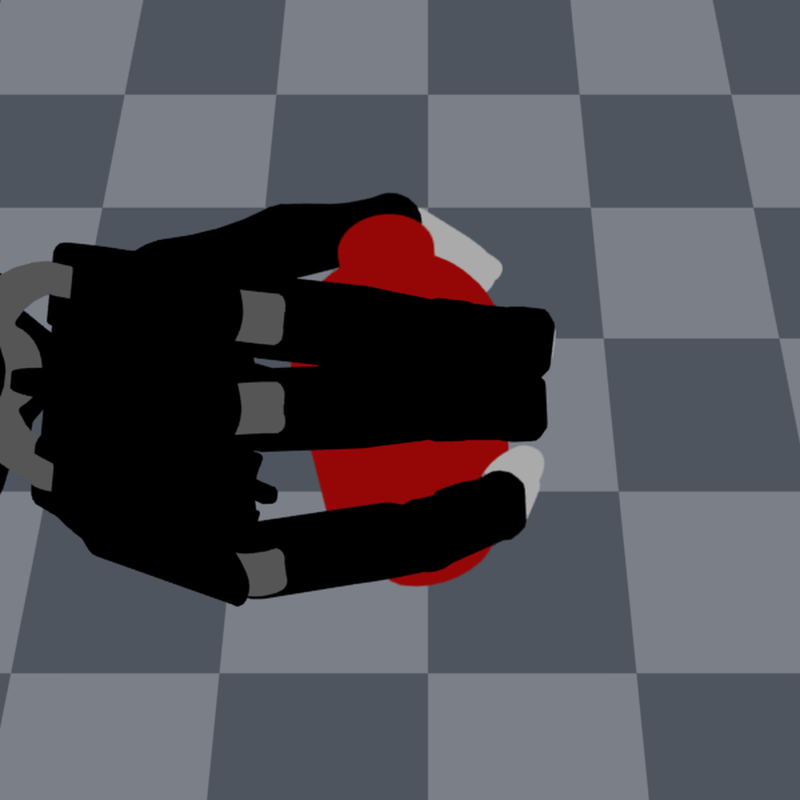
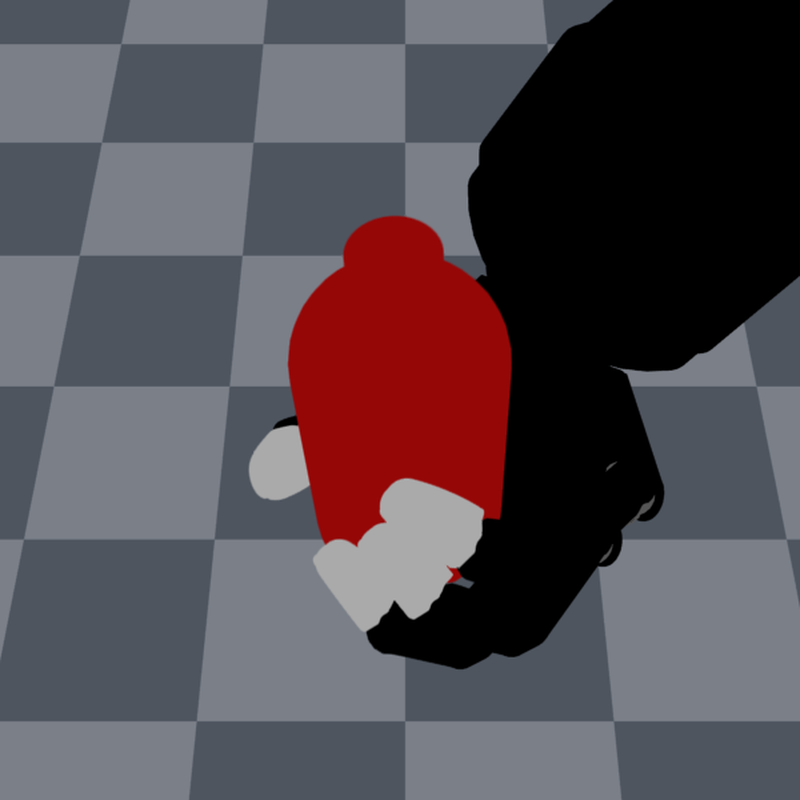
Zero-Shot Grasp Synthesis on Amputated Hand Variants Across 4 Held-Out Objects
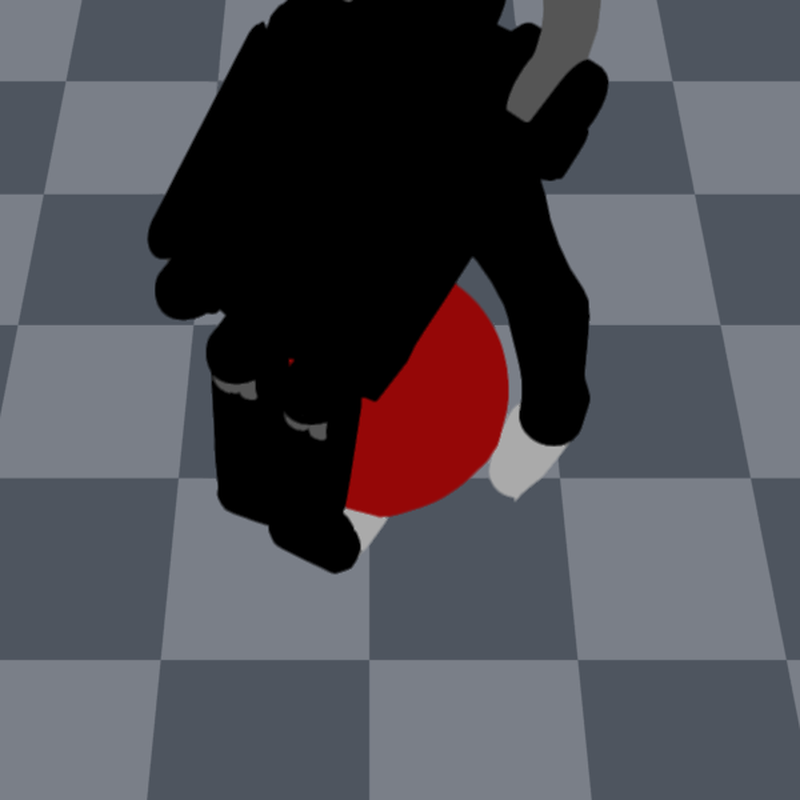
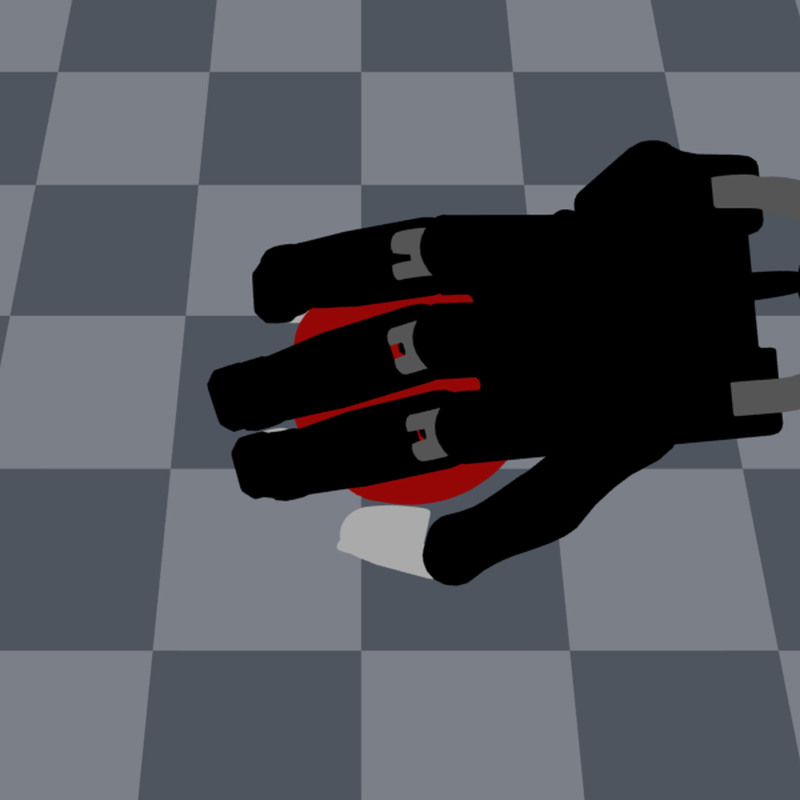
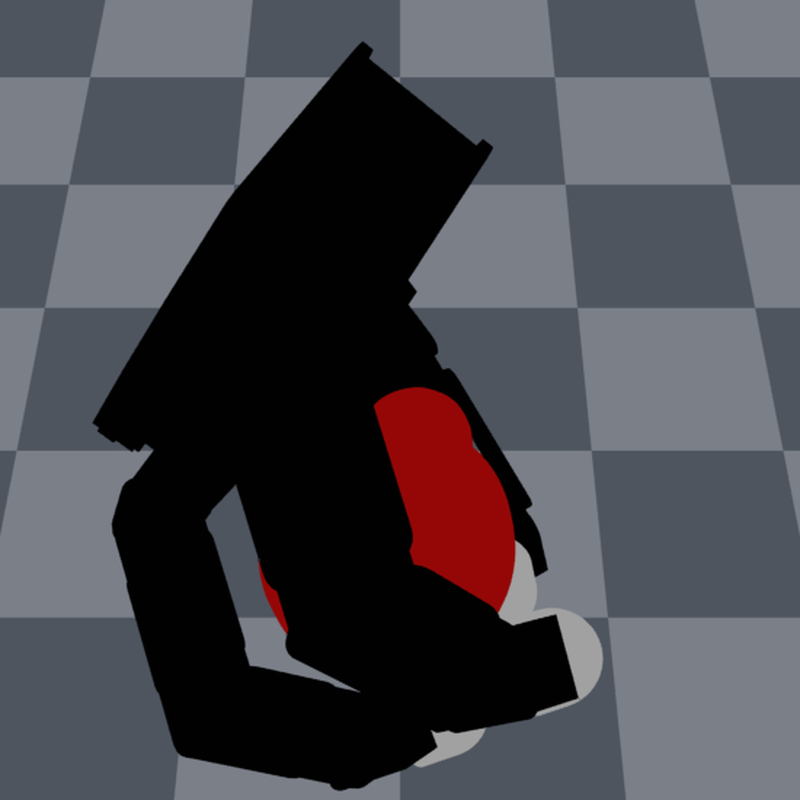
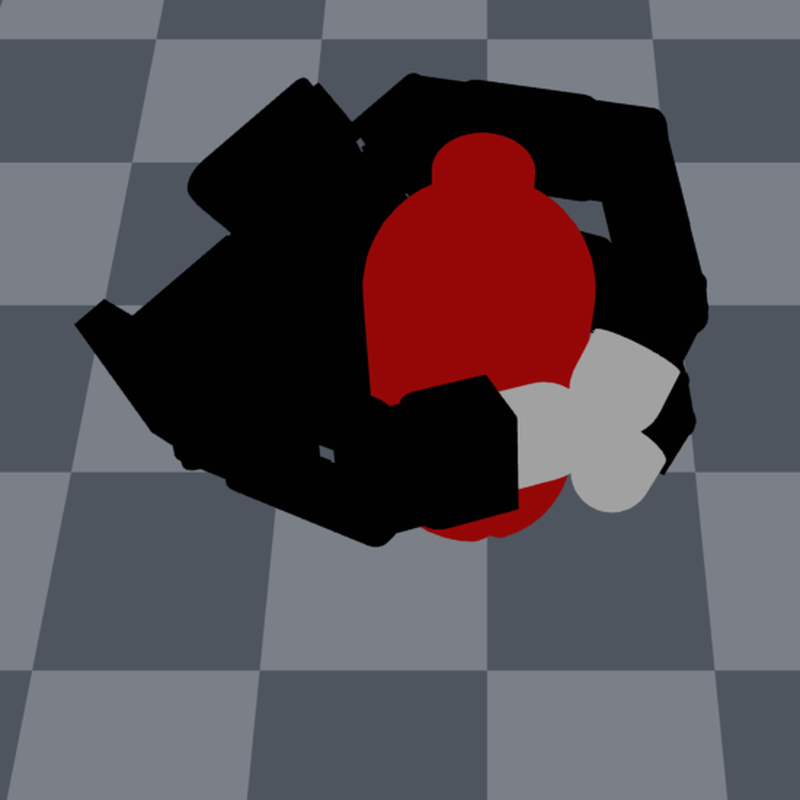
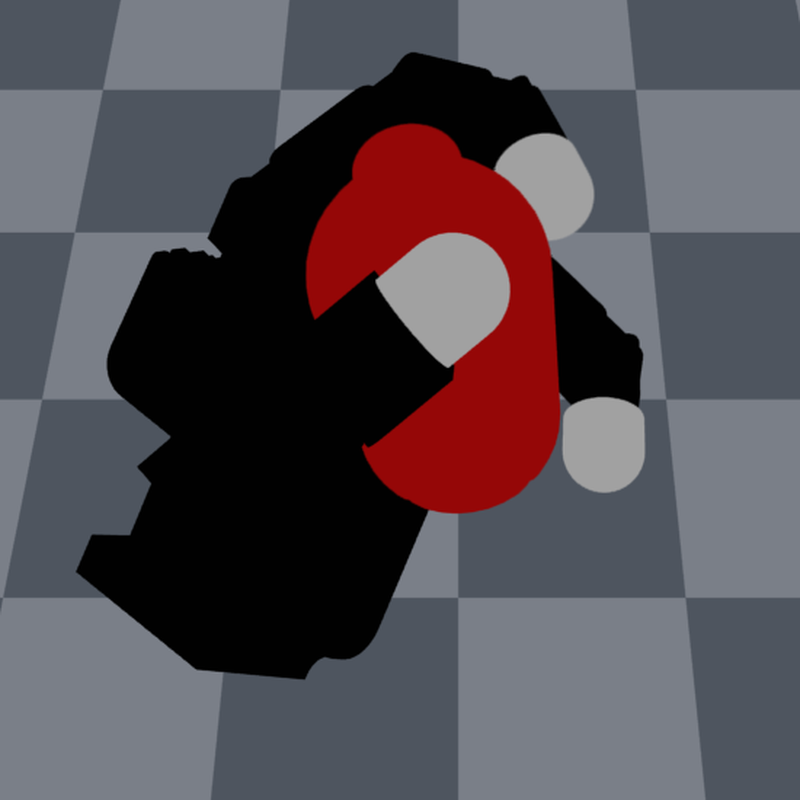
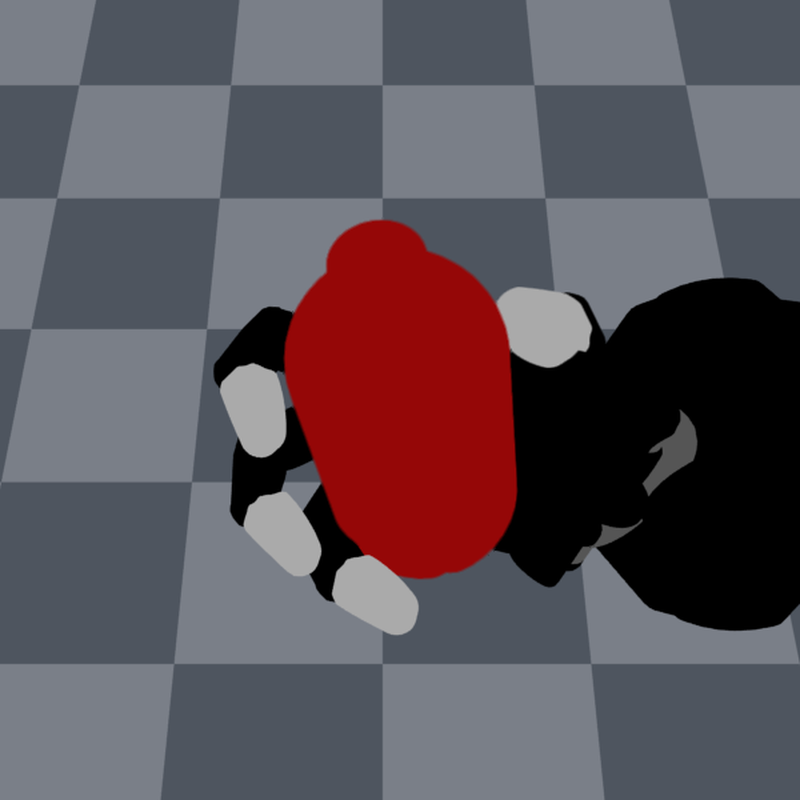
Representative grasps generated on 7 topology-modified hands without retraining. Rows: Baseball, Pear, Potted Meat Can, Water Bottle. Columns: Allegro (w/o Index, w/o Middle, w/o Ring) and ShadowHand (w/o Index, w/o Middle, w/o Ring, w/o Little). Even with missing fingers, DexGraspFlow reorganizes remaining kinematic chains to establish force closure.
| Object | Allegro Hand (Amputated) | ShadowHand (Amputated) | |||||
|---|---|---|---|---|---|---|---|
| w/o Index | w/o Middle | w/o Ring | w/o Index | w/o Middle | w/o Ring | w/o Little | |
| Baseball | 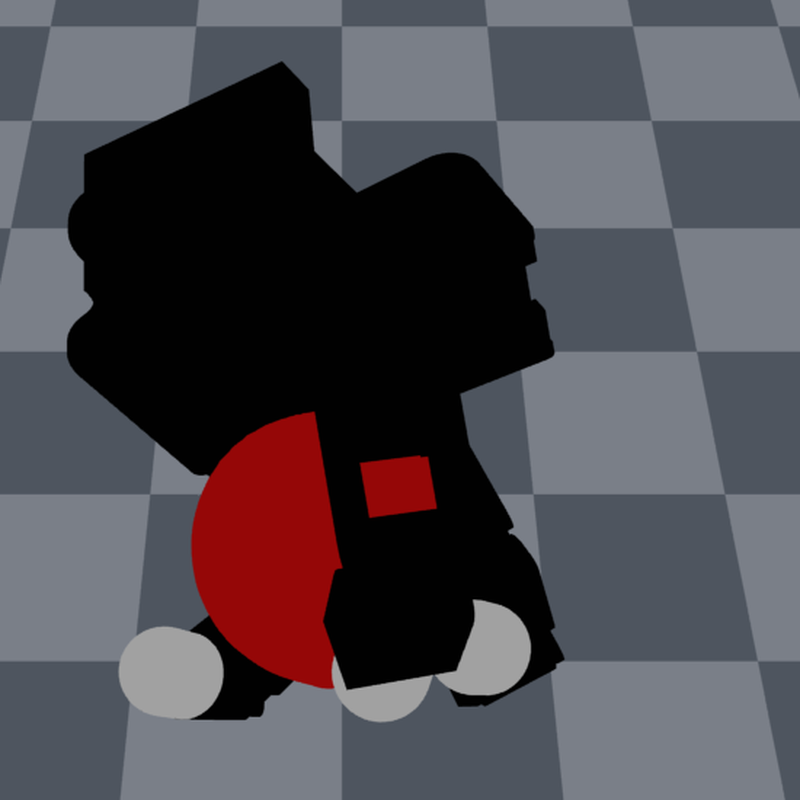 |
 |
 |
 |
 |
 |
 |
| Pear | 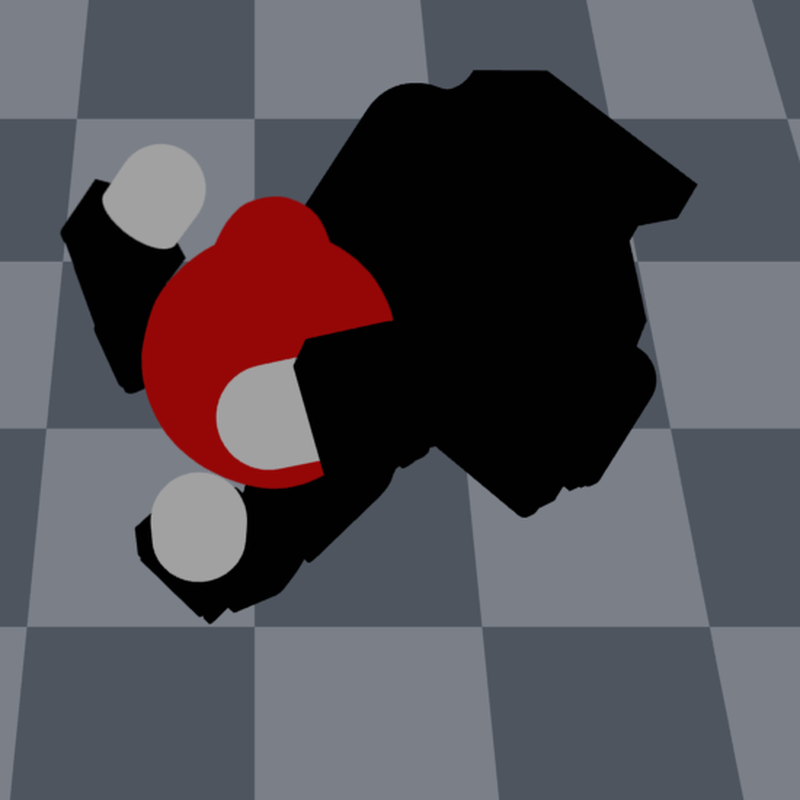 |
 |
 |
 |
 |
 |
 |
| Meat Can | 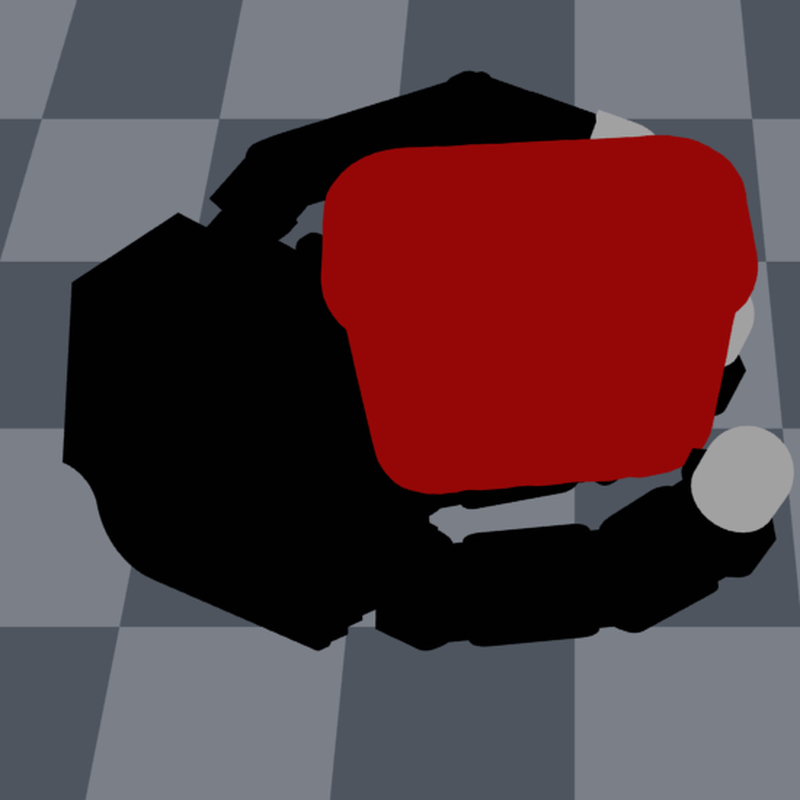 |
 |
 |
 |
 |
 |
 |
| Water Bottle | 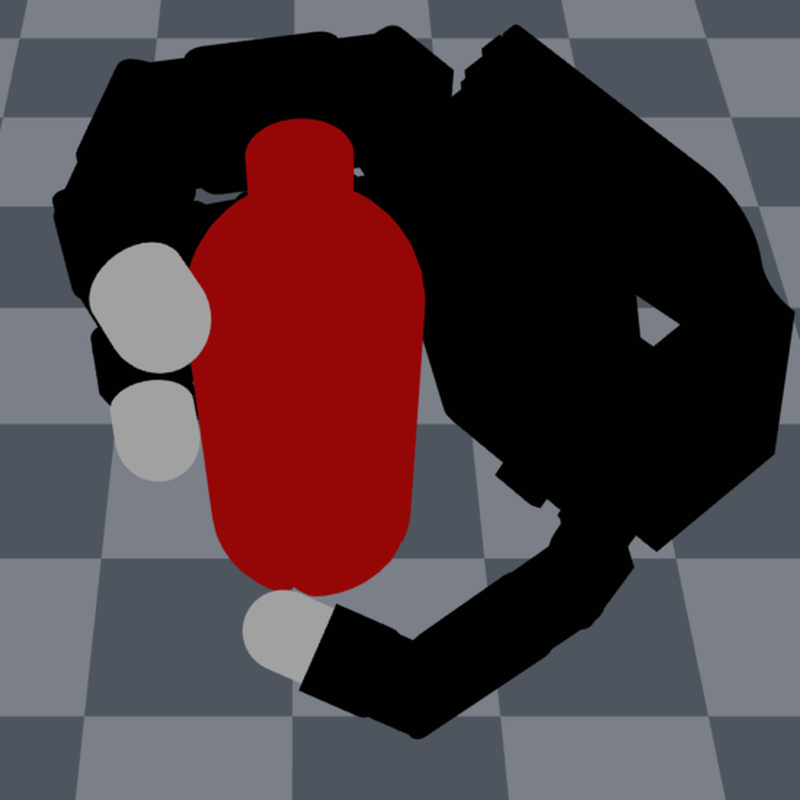 |
 |
 |
 |
 |
 |
 |
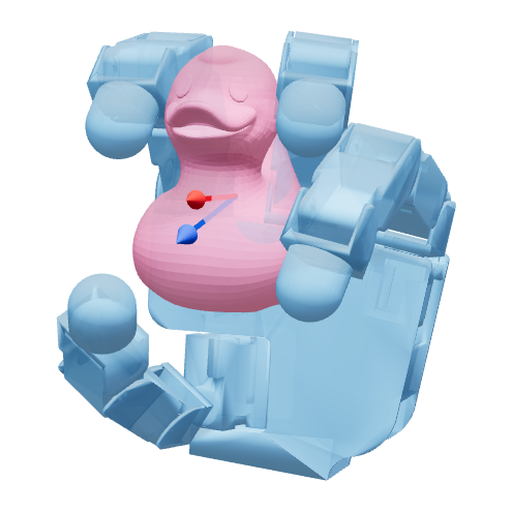
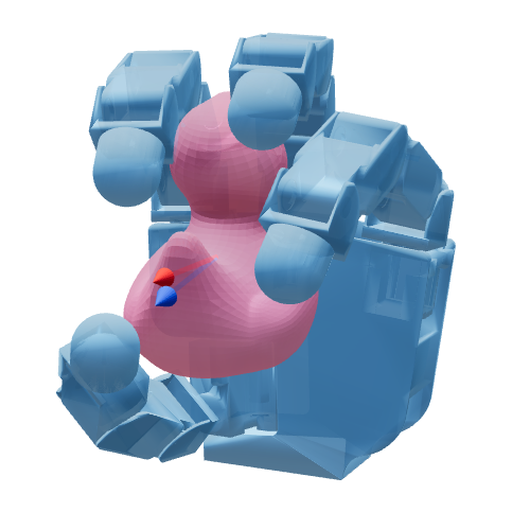
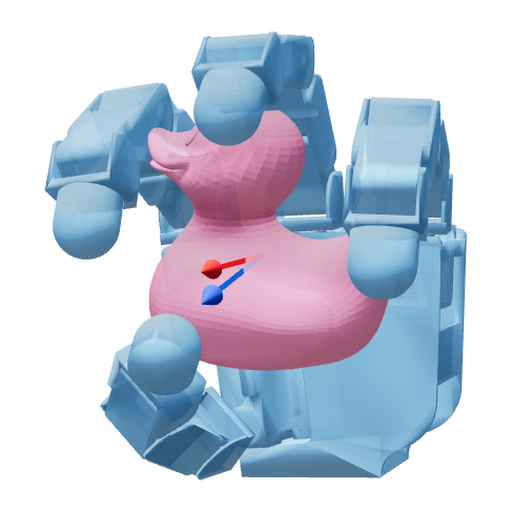
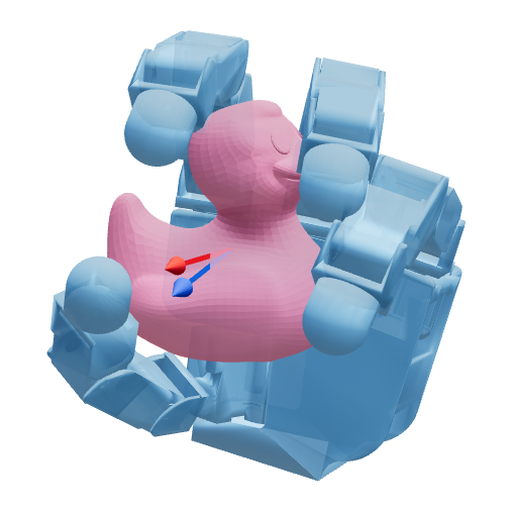
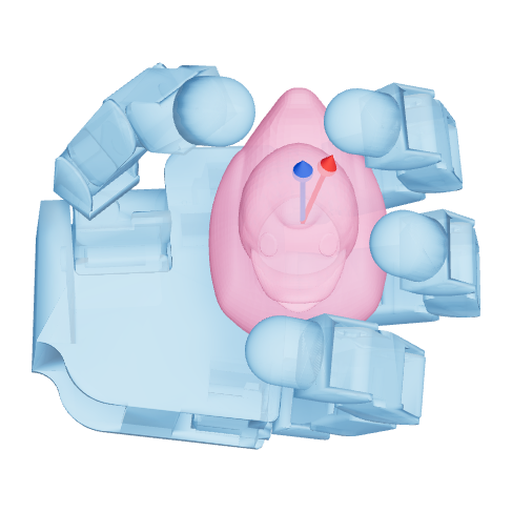
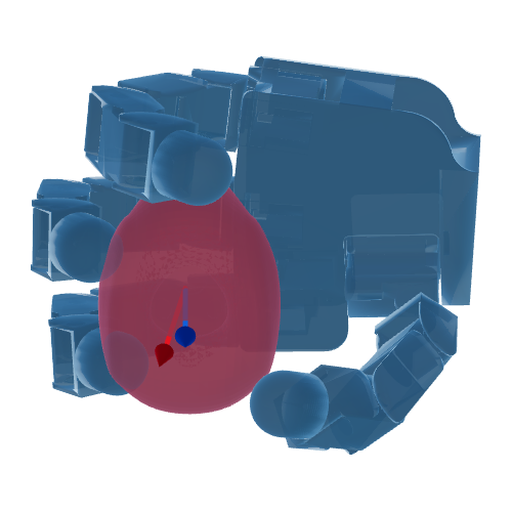
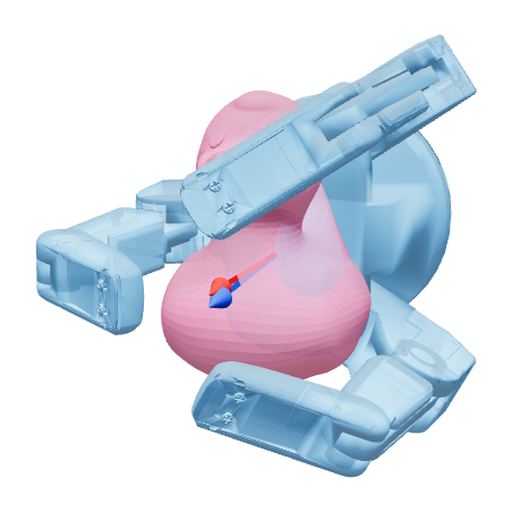
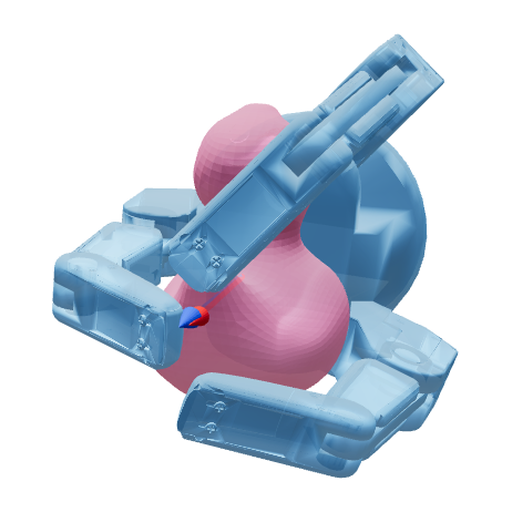
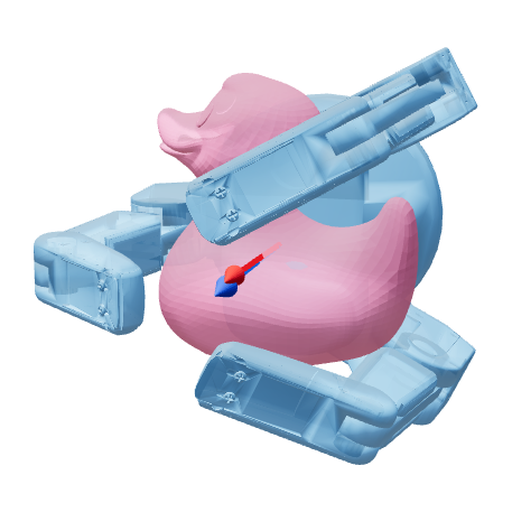
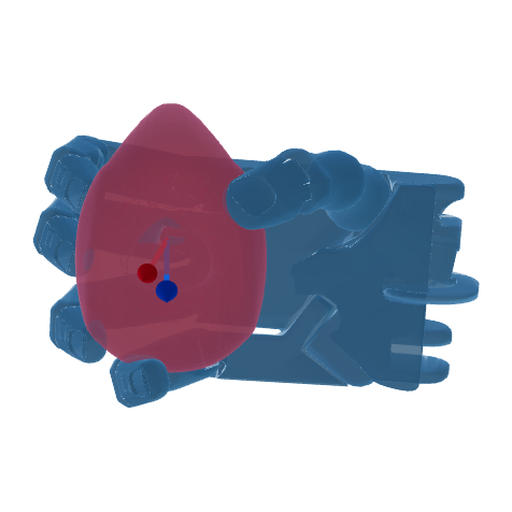
Palm-Orientation-Conditioned Grasps on Held-Out Object (Rubber Duck) Across 6 Canonical Directions
Figure 7 from paper: Grasps generated across six canonical approach directions (+x: Front, -x: Back, +y: Left, -y: Right, +z: Up, -z: Down) under inference-time rotational guidance without reference poses or retraining. Blue and red arrows inside the translucent object indicate the requested target palm approach and post-IK actual palm approach directions, respectively.
 Front (+x)
 Back (-x)
 Left (+y)
 Right (-y)
 Up (+z)
 Down (-z)
 Front (+x)
 Back (-x)
 Left (+y)
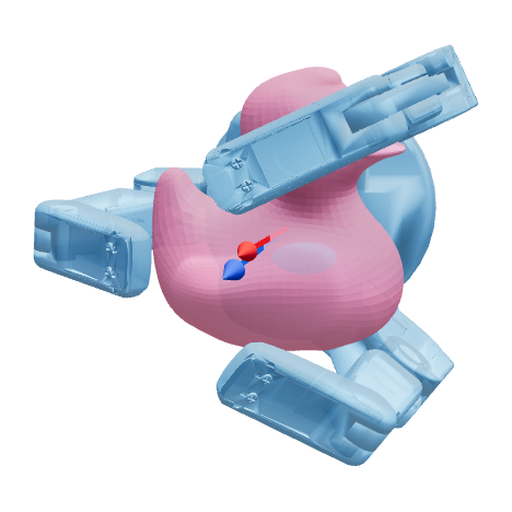 Right (-y)
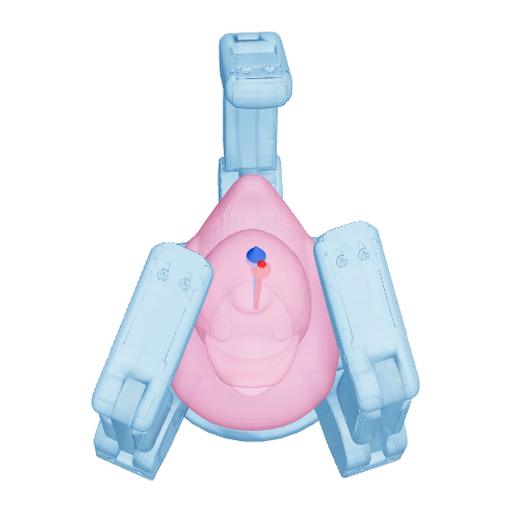 Up (+z)
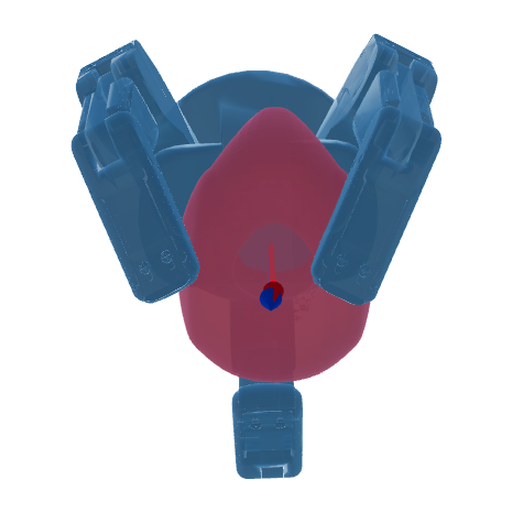 Down (-z)
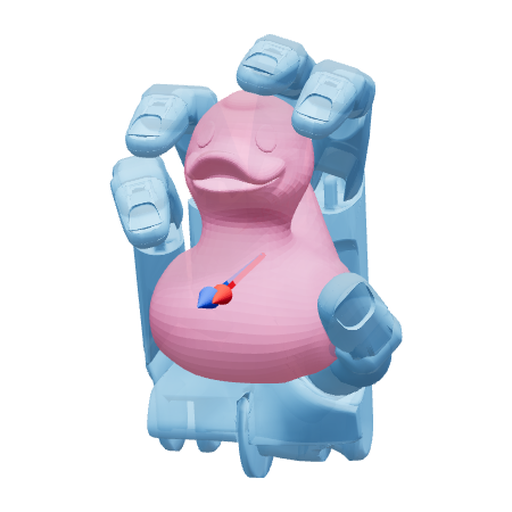 Front (+x)
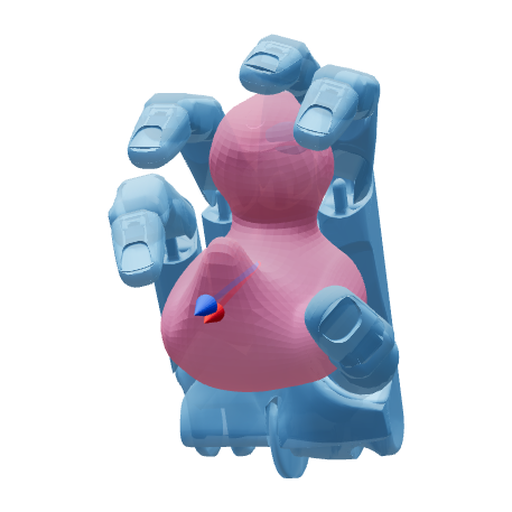 Back (-x)
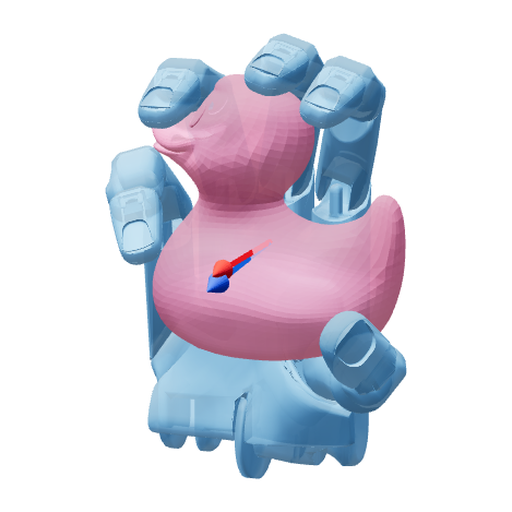 Left (+y)
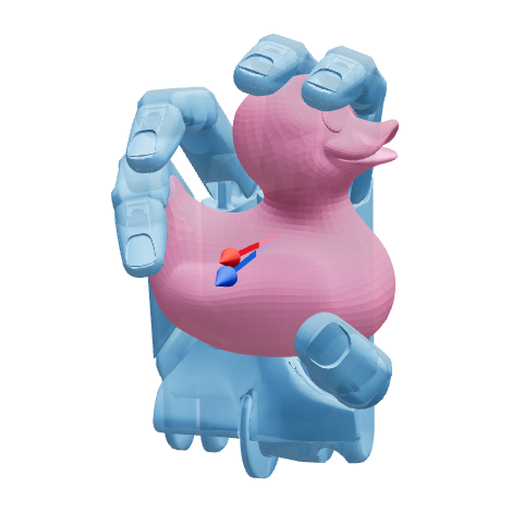 Right (-y)
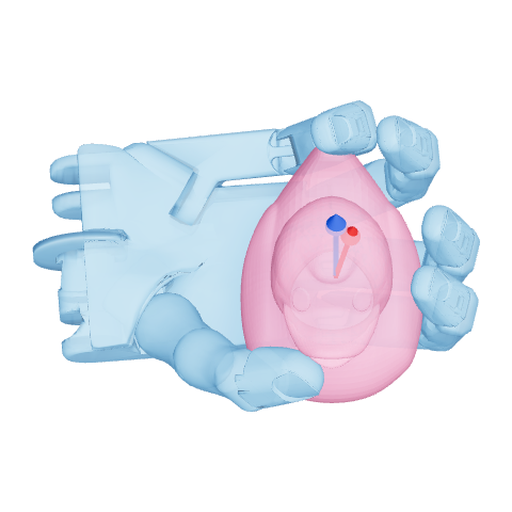 Up (+z)
 Down (-z)
Table III: Six-Direction Conditioned Grasp Generation Results
SR and POE denote grasp success rate and final palm-orientation error, respectively. ΔSR denotes the success-rate difference in percentage points, while ΔPOE = POETRO - POEOurs denotes the absolute POE reduction in degrees; positive values favor DexGraspFlow.
| Setting | Success Rate (%) | Palm-Orientation Error (POE, deg.) ↓ | ||||
|---|---|---|---|---|---|---|
| TRO | Ours | ΔSR ↑ | TRO | Ours | ΔPOE (Drop) ↑ | |
| Hand-wise results | ||||||
| Allegro Hand | 80.42 | 95.17 | +14.75 | 38.25 | 15.18 | +23.07° |
| Barrett Hand | 77.17 | 83.50 | +6.33 | 41.40 | 9.12 | +32.28° |
| ShadowHand | 63.67 | 81.42 | +17.75 | 35.51 | 17.46 | +18.05° |
| Average | 73.75 | 86.69 | +12.94 | 38.38 | 13.92 | +24.46° |
| Direction-wise results averaged across hand embodiments | ||||||
| Front (+x) | 71.33 | 90.50 | +19.17 | 39.44 | 13.95 | +25.49° |
| Back (-x) | 73.67 | 82.67 | +9.00 | 37.95 | 14.16 | +23.79° |
| Left (+y) | 73.67 | 88.00 | +14.33 | 37.88 | 14.24 | +23.64° |
| Right (-y) | 75.50 | 83.17 | +7.67 | 37.66 | 14.64 | +23.02° |
| Up (+z) | 80.00 | 91.50 | +11.50 | 32.37 | 13.24 | +19.13° |
| Down (-z) | 68.33 | 84.33 | +16.00 | 45.00 | 13.29 | +31.71° |
Ablation Studies & In-Depth Analysis: Comprehensive empirical ablations on structural attention biases, ODE integration dynamics, and geodesic guidance scale sensitivity are detailed in the paper.
6. Real-World Robot Deployment (91% Success Rate)
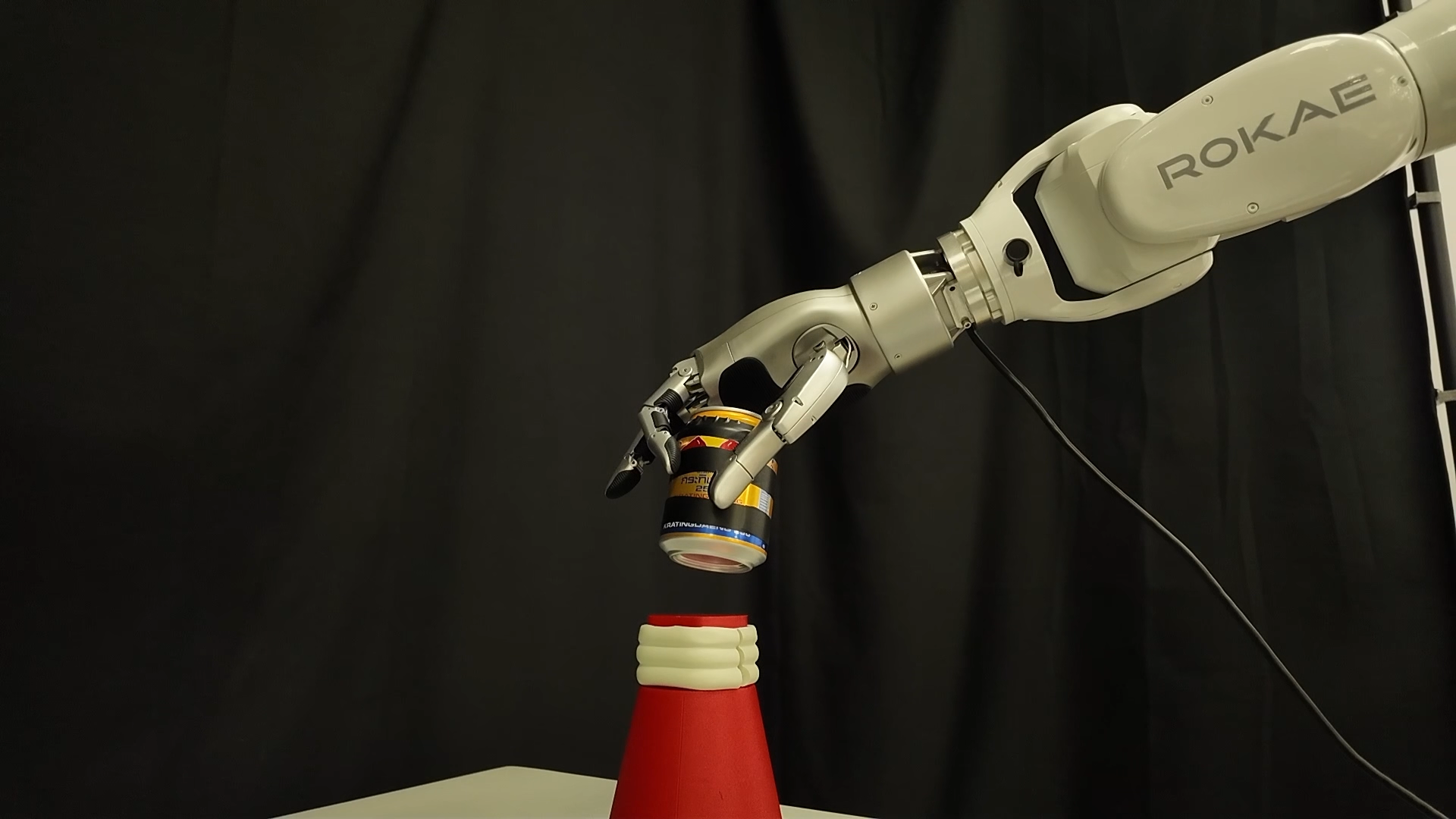
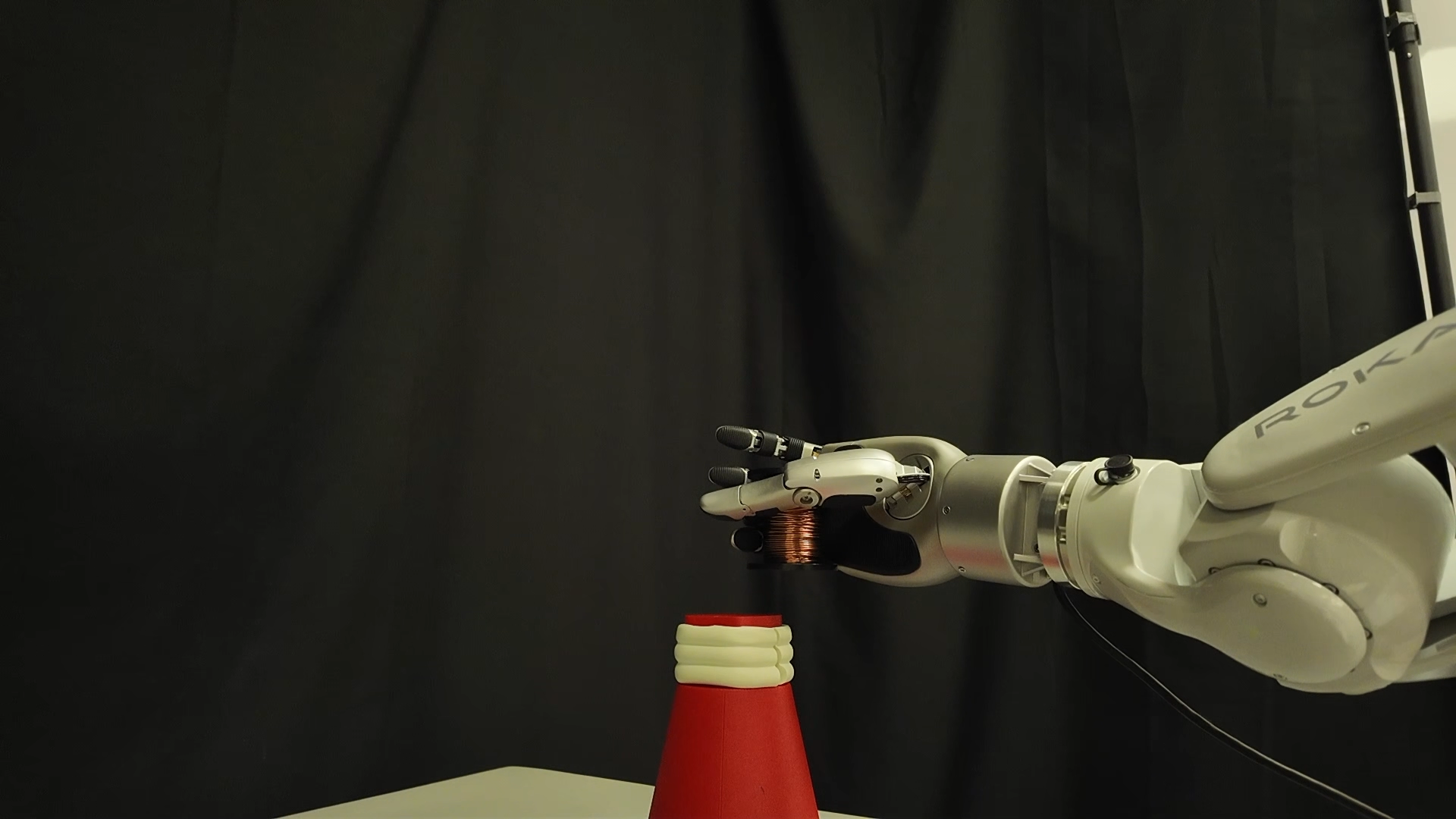
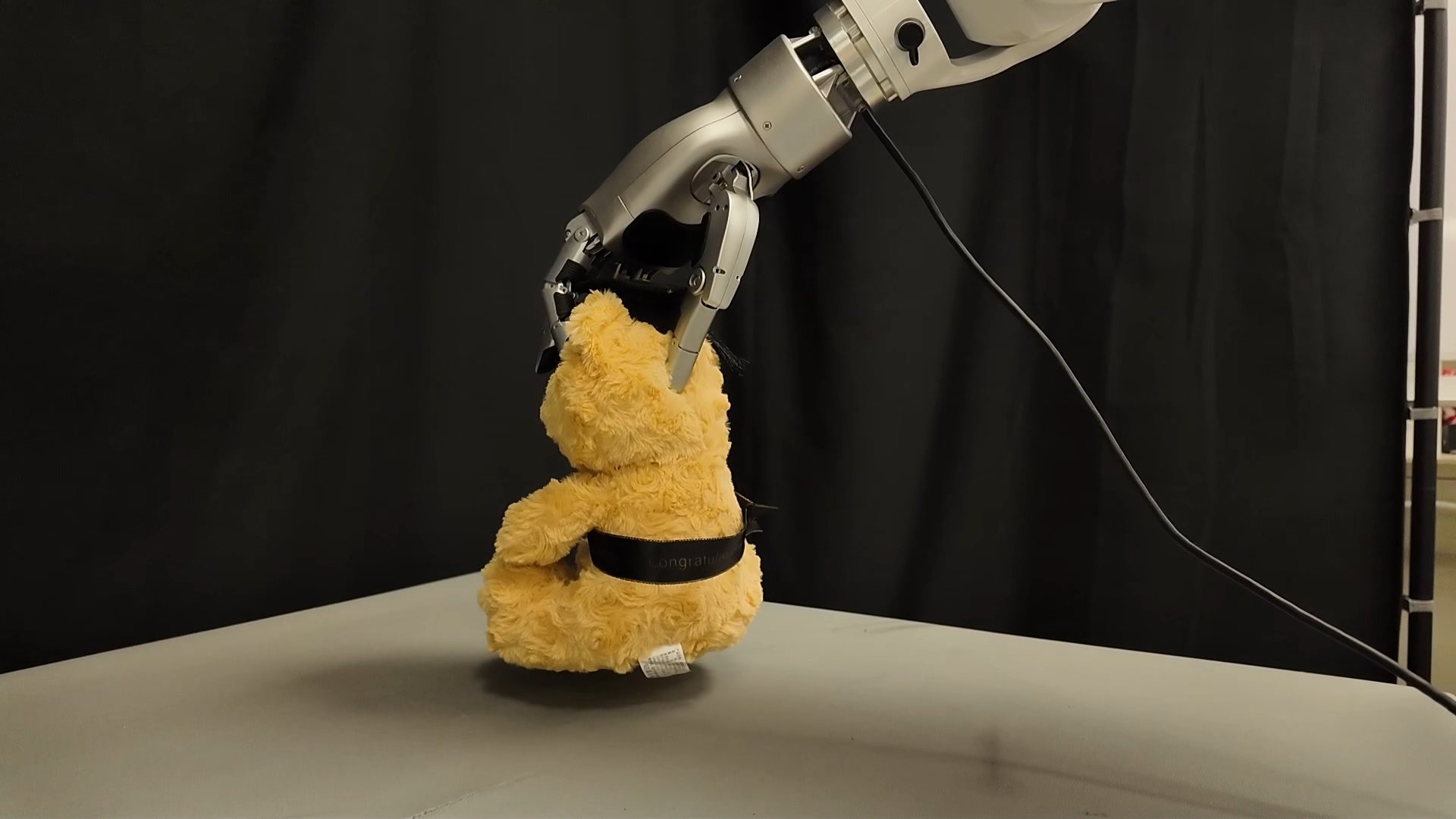
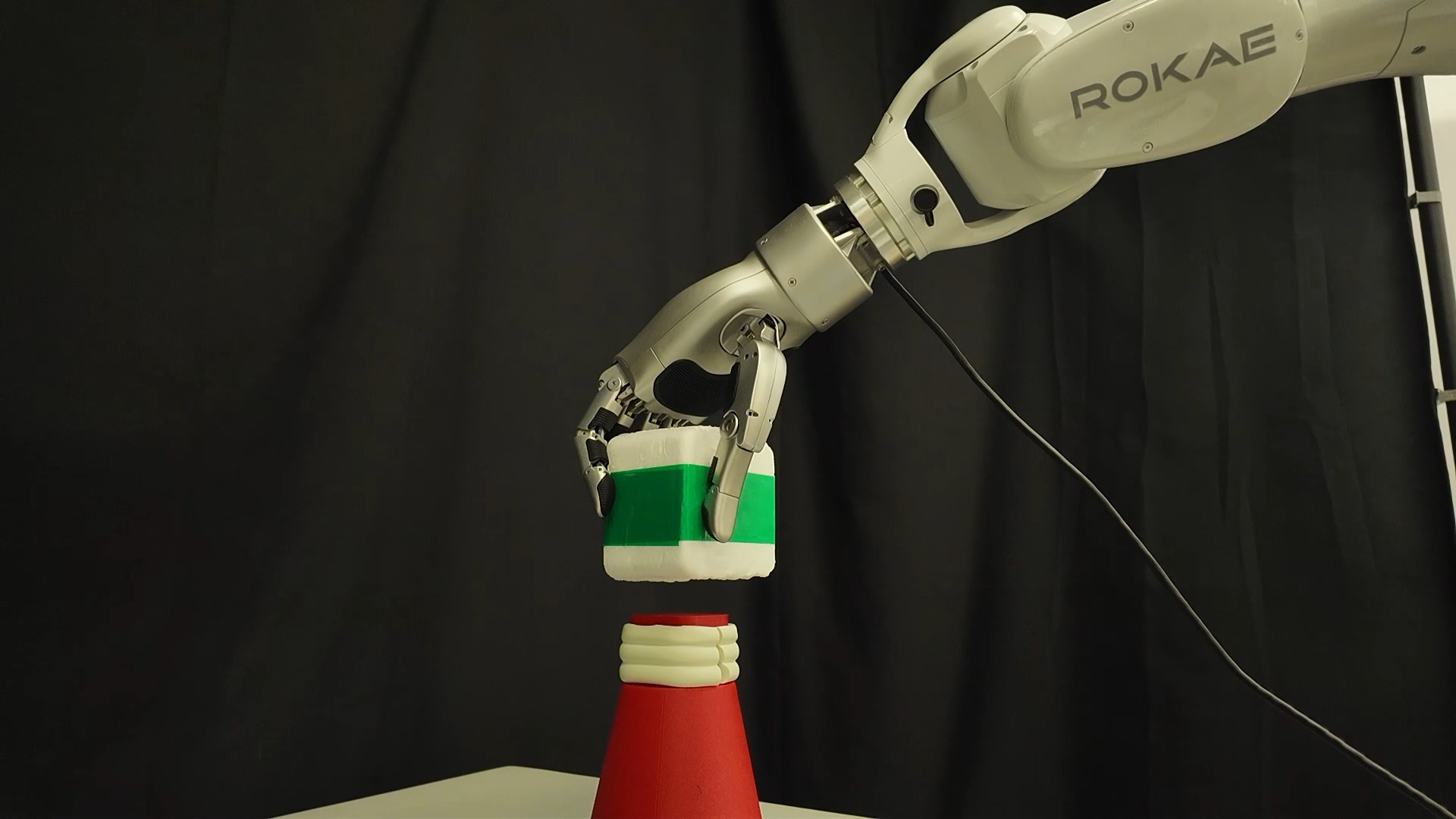
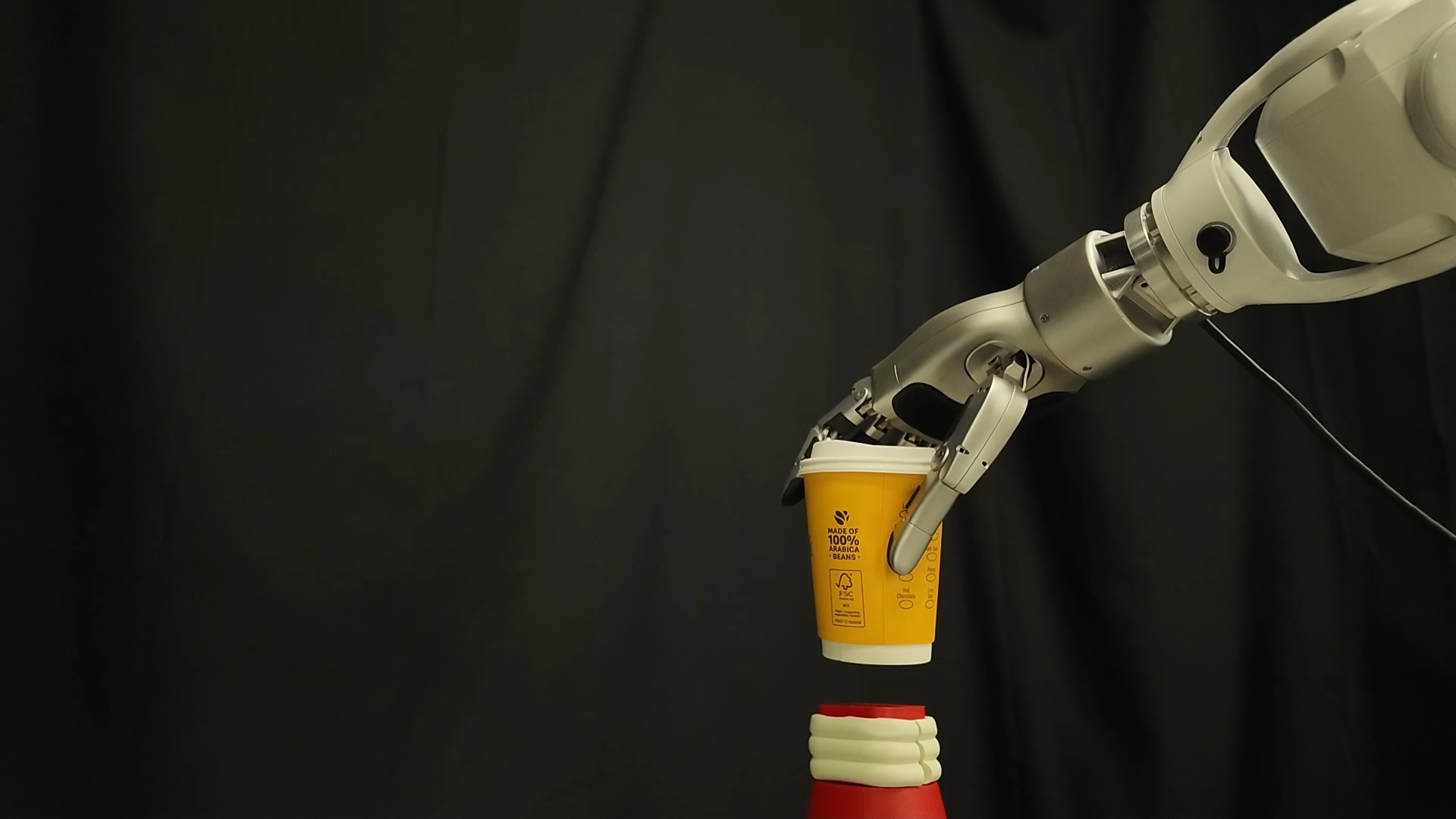
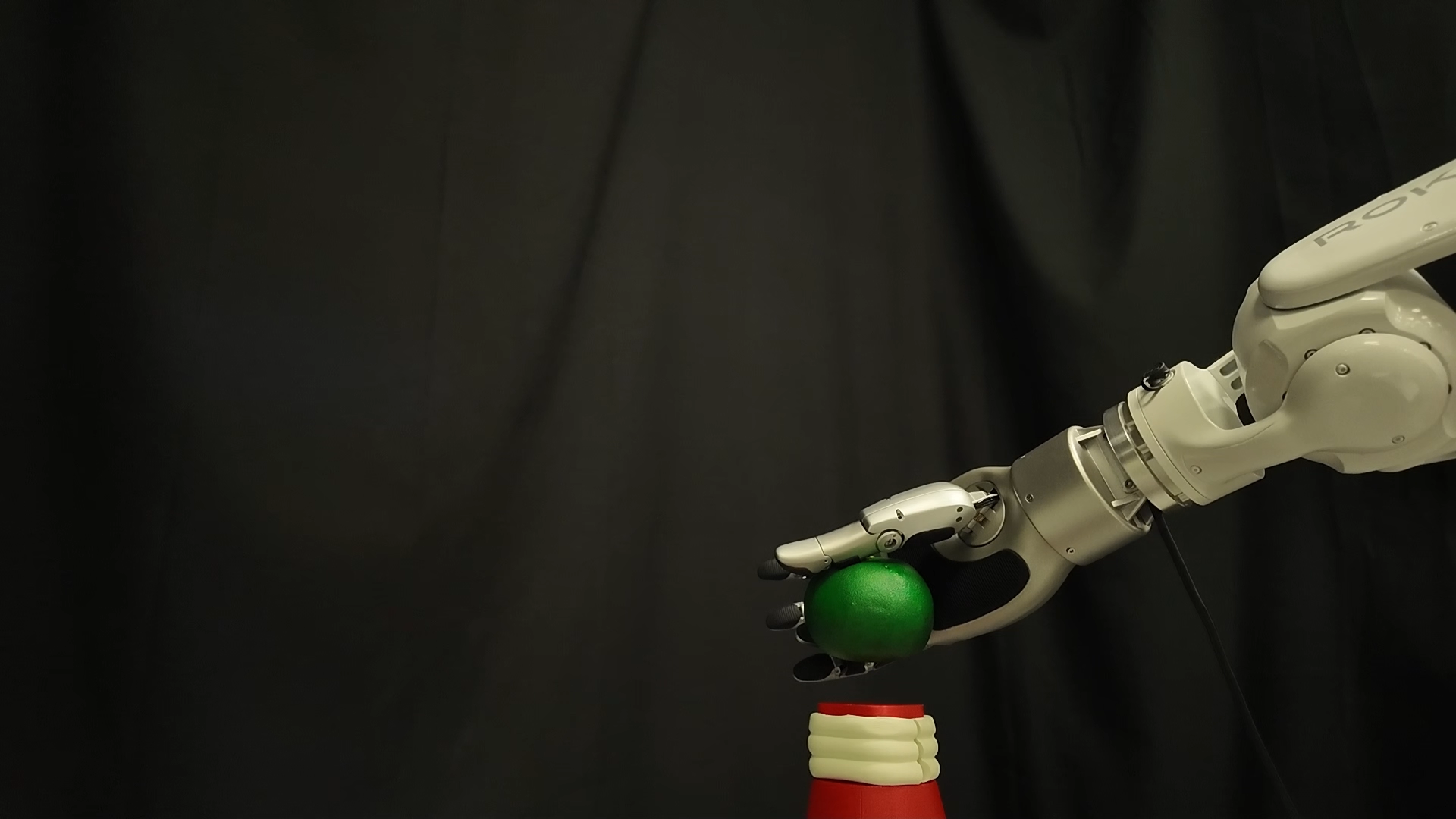
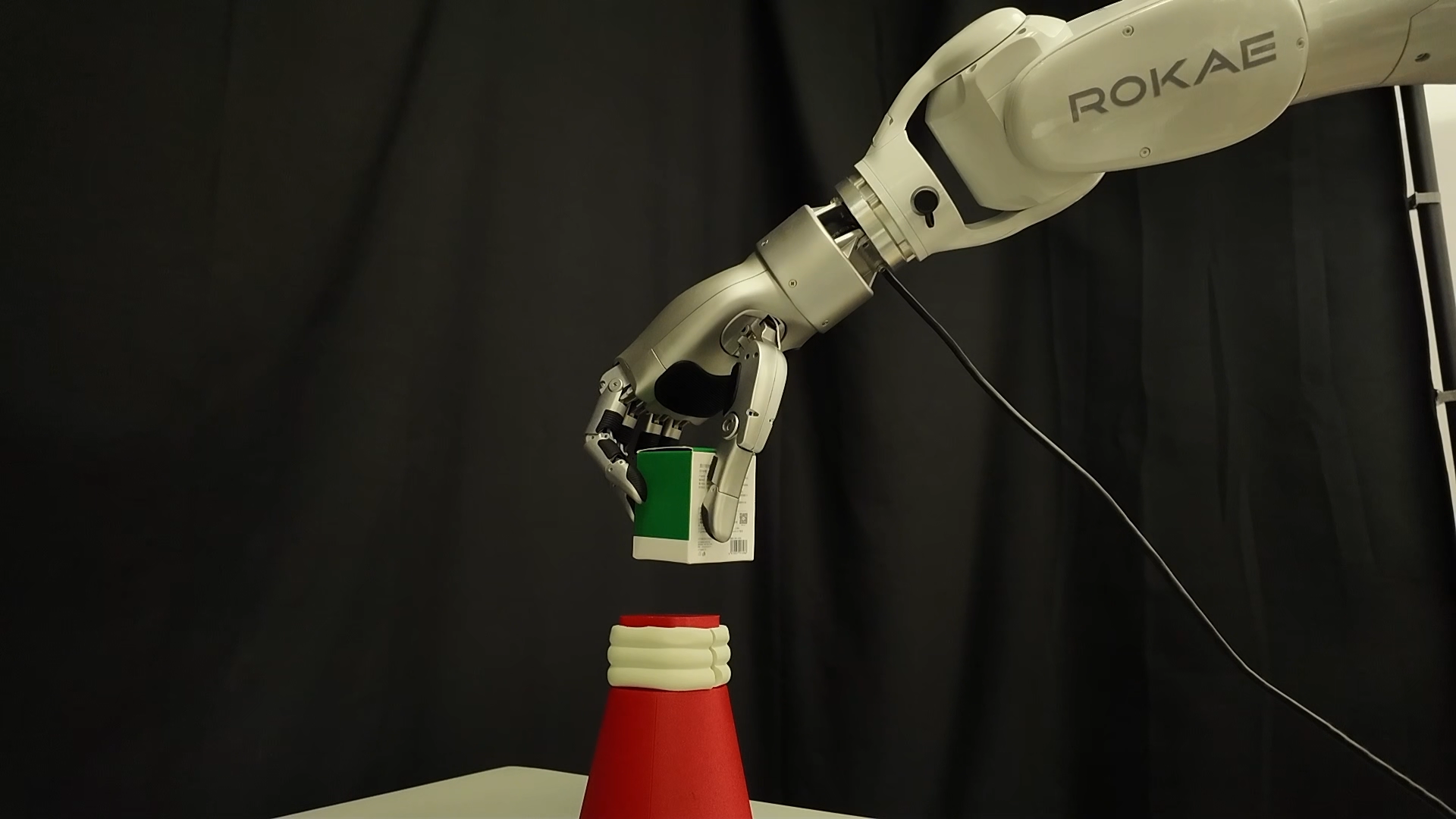
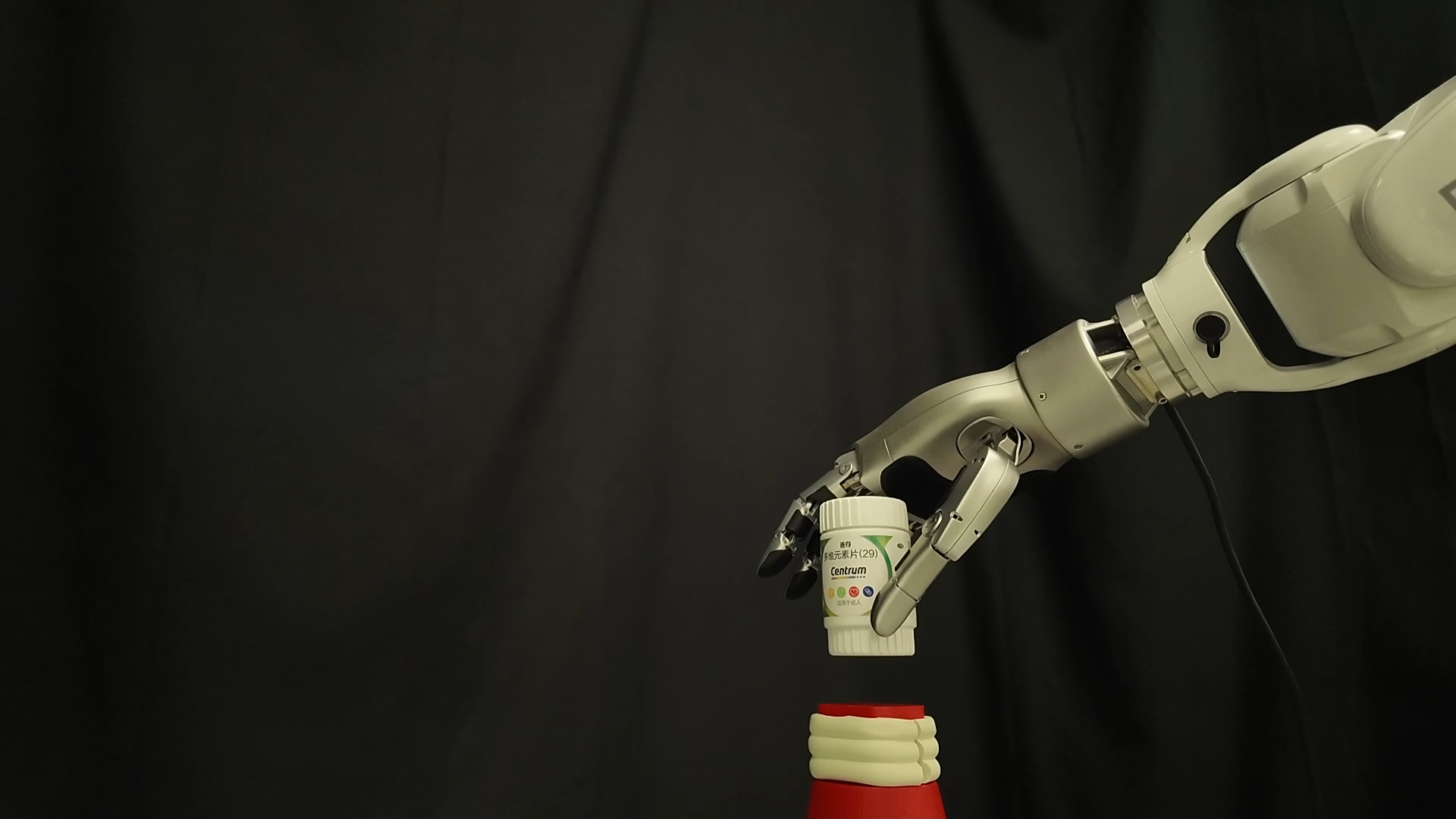
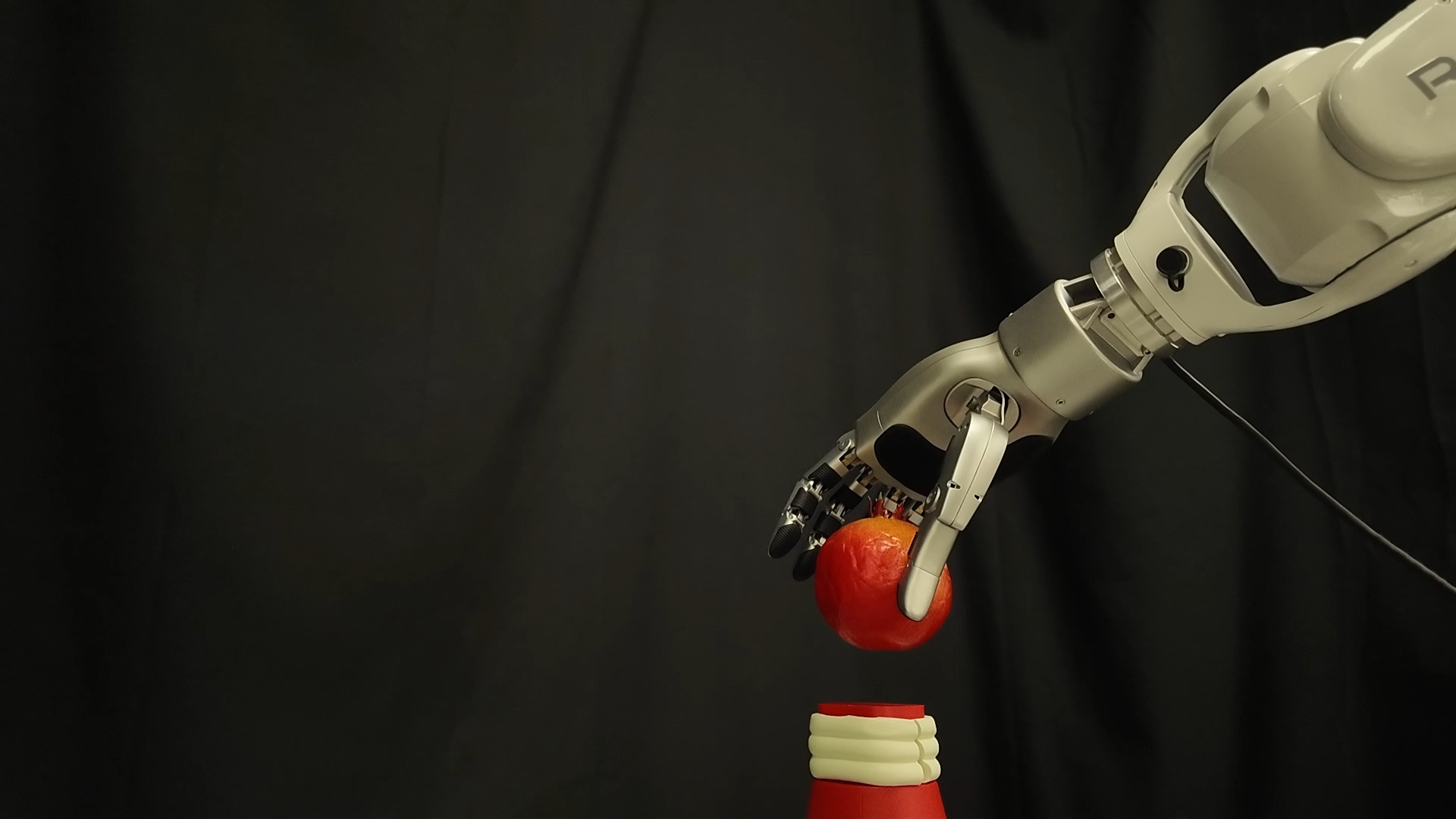
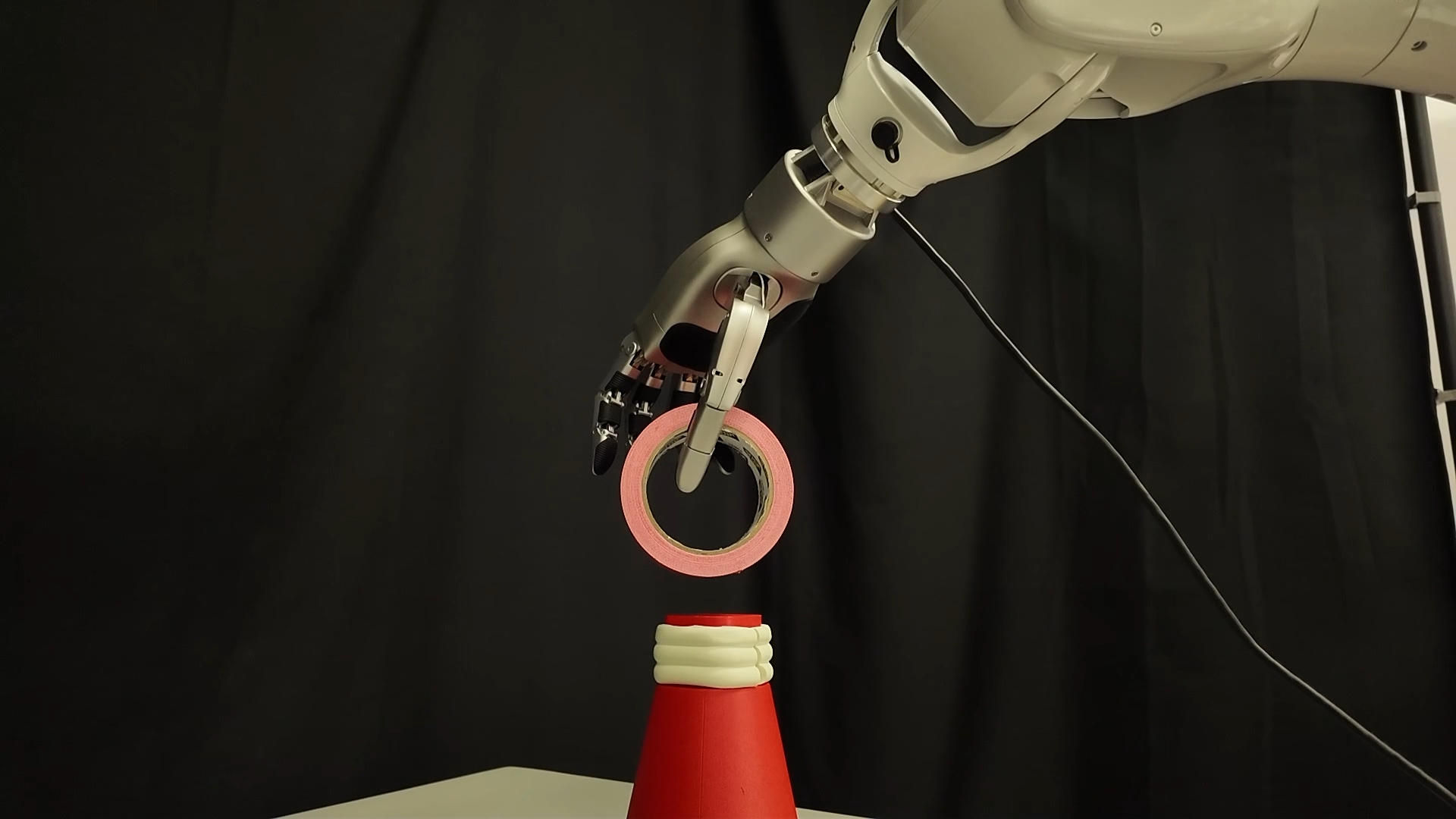
To evaluate real-world feasibility, DexGraspFlow was deployed on a physical robotic workstation consisting of a ROKAE industrial manipulator, a Linker Hand L20Lite dexterous five-finger hand, and an Intel RealSense D435i camera. The system evaluated zero-shot grasp transfer across 10 physical objects never observed during training.
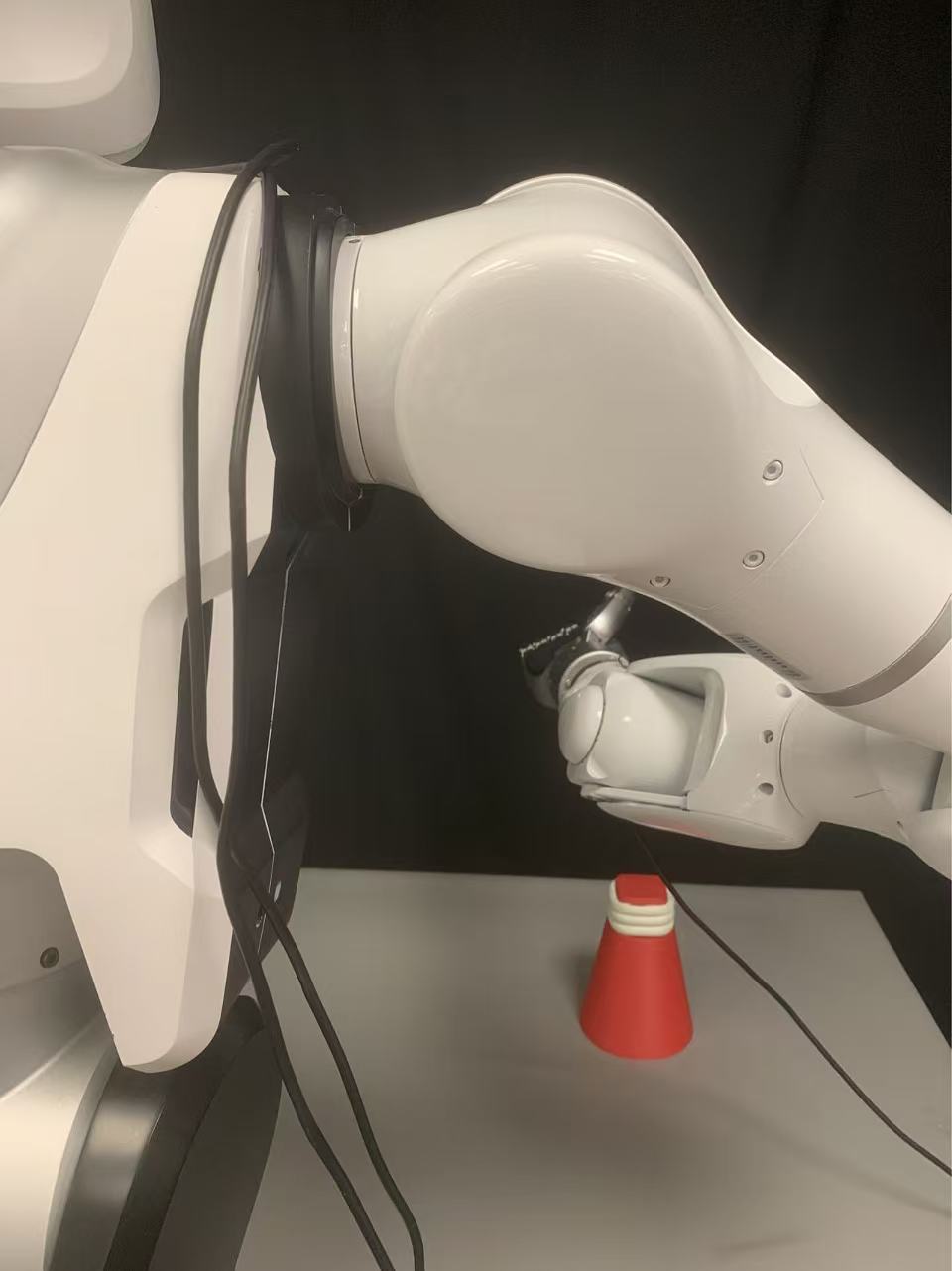
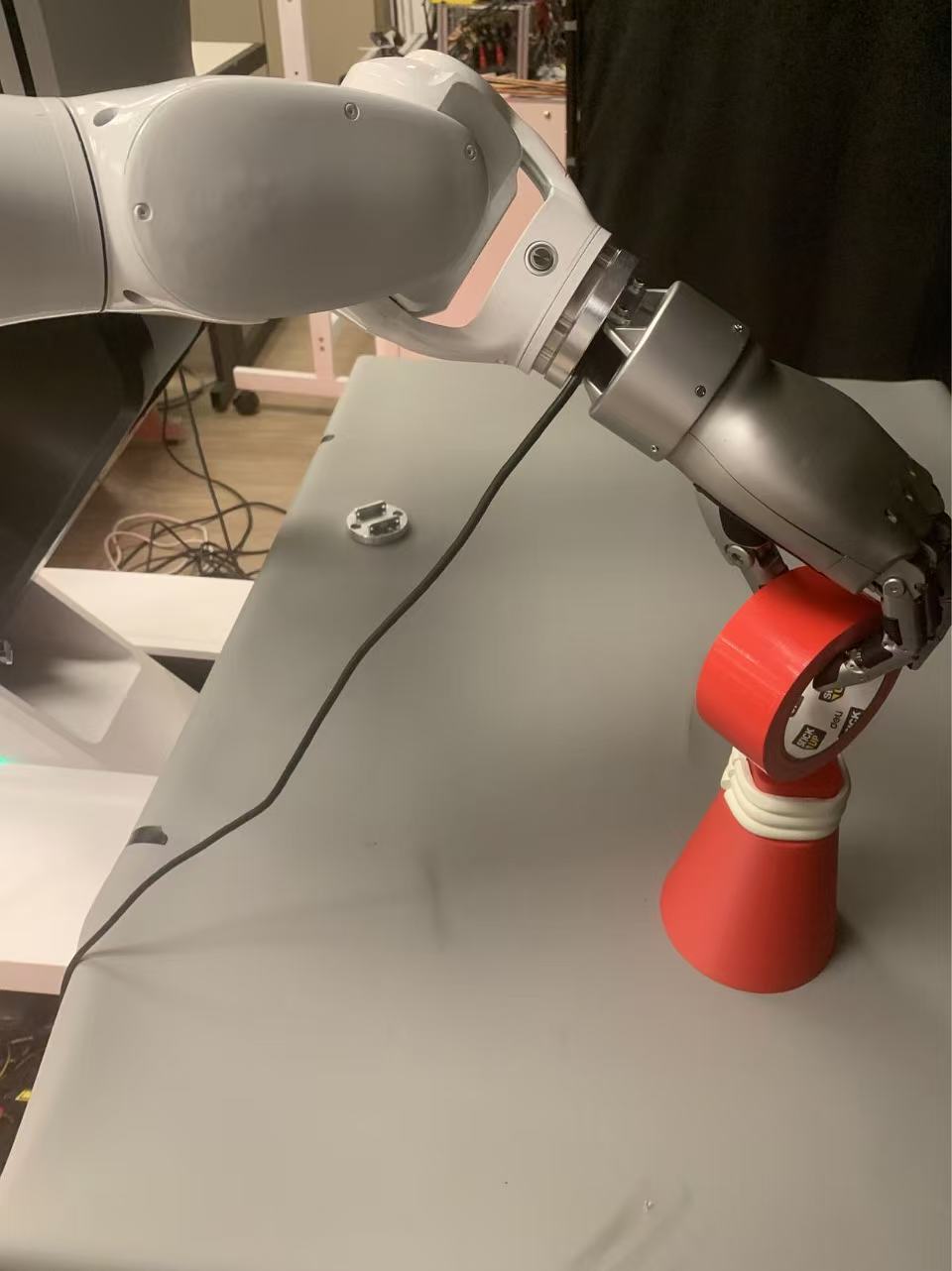
Table VII: Real-Robot Grasping Results Across 10 Unseen Physical Objects
Zero-shot physical grasping trials on Linker Hand L20Lite across 10 unmodeled everyday objects (10 independent trials each).
| Object | Success / Trials | Object | Success / Trials |
|---|---|---|---|
| Can | 7 / 10 | Coil | 9 / 10 |
| Toy | 10 / 10 | Foam Box Lid | 10 / 10 |
| McCafe | 10 / 10 | Orange | 9 / 10 |
| Packaging Box | 10 / 10 | Pill Bottle | 10 / 10 |
| Pomegranate | 8 / 10 | Red Tape | 8 / 10 |
| Overall Real-Robot Success | 91 / 100 (91.0%) | ||
Real-Robot Grasping Trials on 10 Unseen Physical Objects
To rigorously evaluate zero-shot physical transfer, the test benchmark features 10 diverse physical objects unseen during model training. These objects cover a wide spectrum of geometric topologies and challenging contact mechanics, including thick lightweight foam slabs (Foam Box Lid), delicate annular/spiral contours (Coil, Red Tape), low-friction smooth metallic cylinders (Can), deformable compliant shells (McCafe, Toy), bulky volumetric cuboids (Packaging Box), and heavy asymmetric natural fruits (Orange, Pomegranate).
Interactive Video Gallery: Live physical trials using the ROKAE manipulator and Linker Hand L20Lite (91/100 overall success). Click any video to play.
BibTeX
@article{zhou2026dexgraspflow,
  title={DexGraspFlow: Topology-Aware SE(3) Flow Matching for Cross-Embodiment Dexterous Grasp Generation},
  author={Zhou, Bin and Ma, Boyu and Zhou, Xinyu and Dong, Jiahua and Zhou, Chuhao and Liu, Yizhou and Wan, Hao and Yang, Jianfei},
  journal={arXiv preprint},
  year={2026}
}